
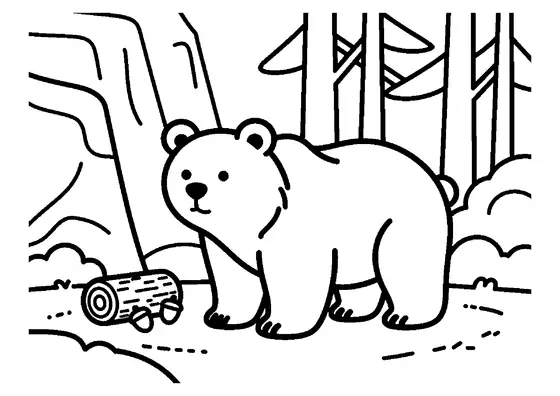
Bear Outside a Limestone Cave
A wild bear stands near the entrance of a limestone cavern surrounded by large rocks and the forest ground.

A4 format (portrait), black outlines on a white background · for home and classroom use
All coloring pages: Bear Coloring Pages
Similar coloring pages: Bear Coloring Pages



What else can you print? Free, no account needed
Custom Name Coloring Pages
Enter your child's name to generate a custom coloring page featuring large outline letters to color and decorate.
Open generator →Connect the Dots Generator
Eight connect-the-dots pictures across three difficulty levels. Features faint outline guides for younger children and dots only for older kids.
Open generator →Printables
Worksheets, tracing lines, mazes and dot-to-dots in A4.
Browse printables →
Wild Bear at a Cavern Entrance
Limestone caves form over thousands of years as groundwater dissolves soluble bedrock, creating hollow spaces beneath the earth. Bears frequently use these natural stone shelters to rest, hide from severe weather, or sleep through the cold winter months. The area outside a cave entrance often features fallen trees, large boulders, and thick moss that thrives in the cool damp air.
How Bears Use Natural Caves
Bears choose caves with narrow openings that help keep out predators and cold wind. Inside, the temperature stays relatively constant throughout the year compared to the outdoor weather. In regions where limestone is abundant, these rock shelters provide safe spaces for female bears to give birth and raise their cubs during early spring.
Colors of a Cave Environment
- Brown bear fur: Shades of dark brown, tan, or cinnamon
- Limestone rock face: Pale gray, beige, or off-white
- Forest floor: Earthy brown soil with green moss patches
- Fallen tree log: Weathered dark brown or gray bark