
In Short: How Do You Build Concentration in a Preschool-Age Child?
- Keep it short: use a 3–10 minute task your child can finish successfully.
- Use movement and play: stop-and-go games, pretend play, puzzles, and mazes.
- One task at a time, with no television in the background and no pile of distracting toys nearby.
- Practise at a similar time each day, ideally when your child is rested, such as in the morning or after a nap.
- Praise persistence, not only the result: “You stayed with it until the end.”
How Long Can a Preschool-Age Child Concentrate?
Preschool-age children often focus for short periods, and that is normal. In practice, a 4-year-old may stay with a calm task for a few minutes, while a 5–6-year-old may manage anywhere from several minutes to around ten or more, and longer with favourite play. There is little value in comparing children minute by minute. More useful is noticing whether your child can stay with a short task a little longer over time.
Researchers at Harvard’s Center on the Developing Child describe the skills behind this as the brain’s “air traffic control” system. These executive-function skills help children plan, focus attention, and switch between tasks. They develop rapidly in the preschool years and can be practised through play.
Movement Games That Build Attention
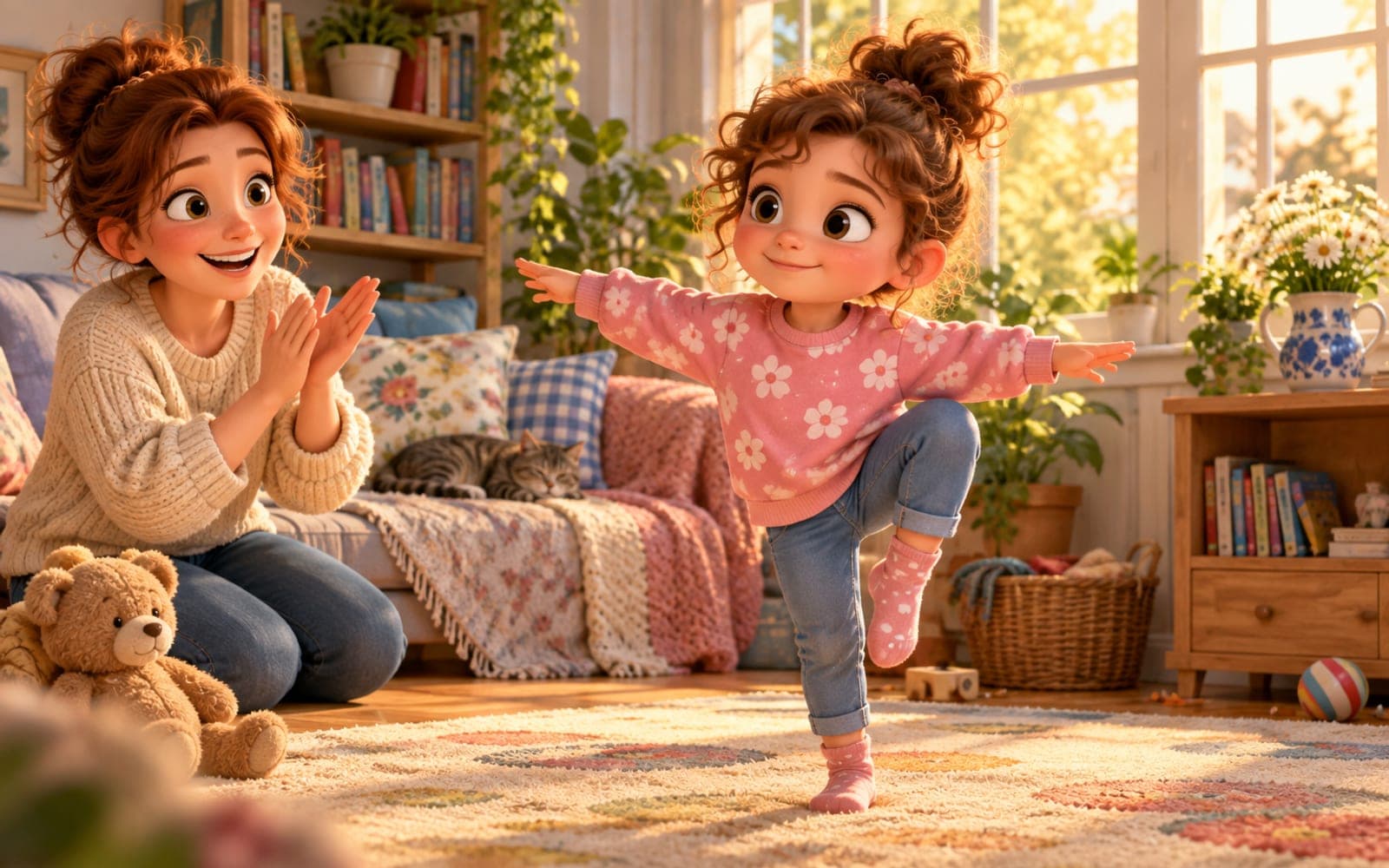
Movement is a useful way for preschool-age children to practise attention because they have to listen and control their bodies.
- Freeze dance: your child dances while music plays and freezes like a statue when it stops.
- Color commands: “When I say red, jump. When I say blue, sit down.” Add a third color later.
- Bird and cat: when you say “bird”, your child flaps their arms; for “cat”, they crawl quietly; for “still”, they sit without moving.
- Carry the treasure: carry a small ball on a spoon from one side of the room to the other.
Harvard’s guide for parents and educators includes movement games that require children to stop, pretend play, storytelling, matching, and sorting among useful activities for preschool-age executive-function development.
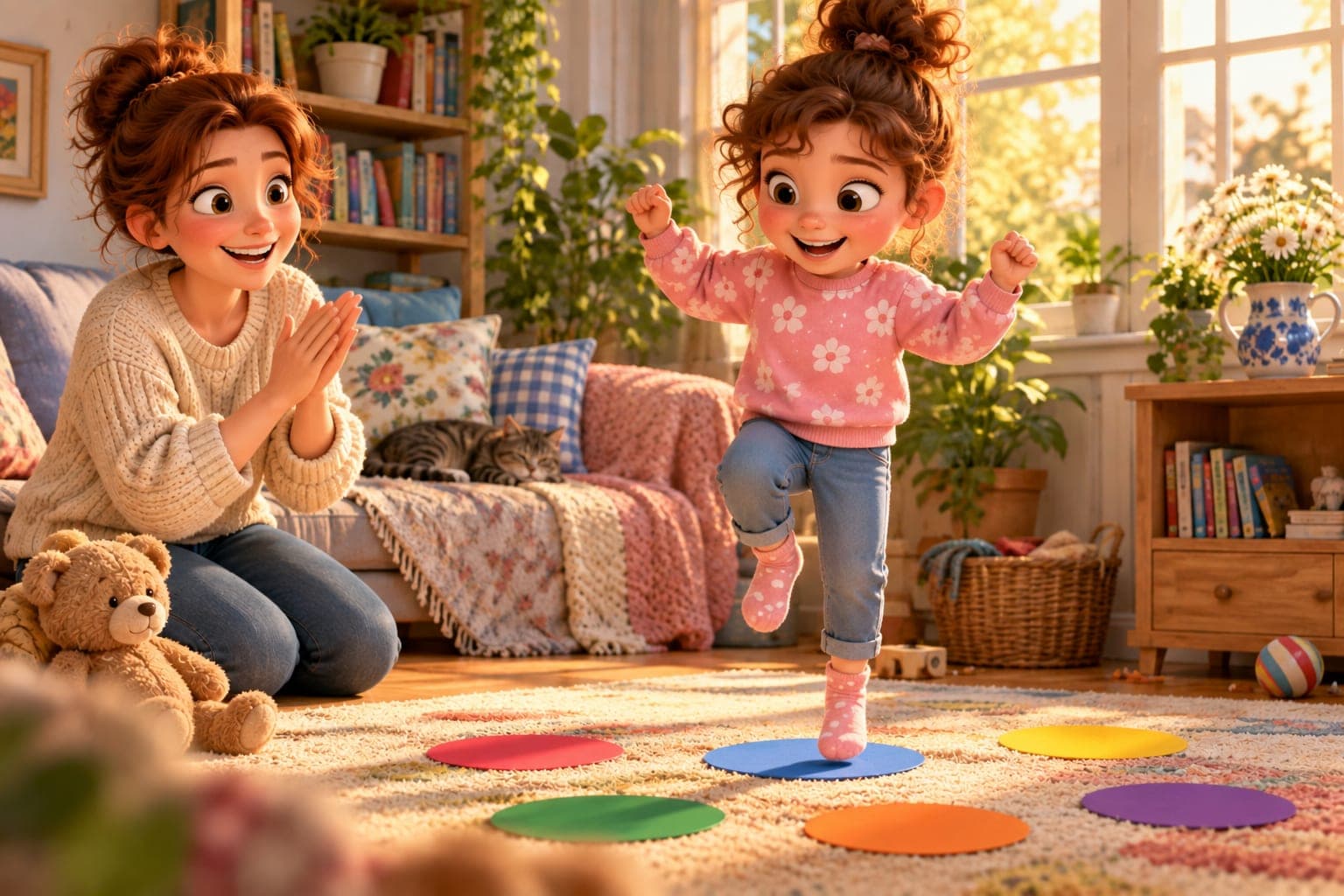
Table Activities for 5–10 Minutes
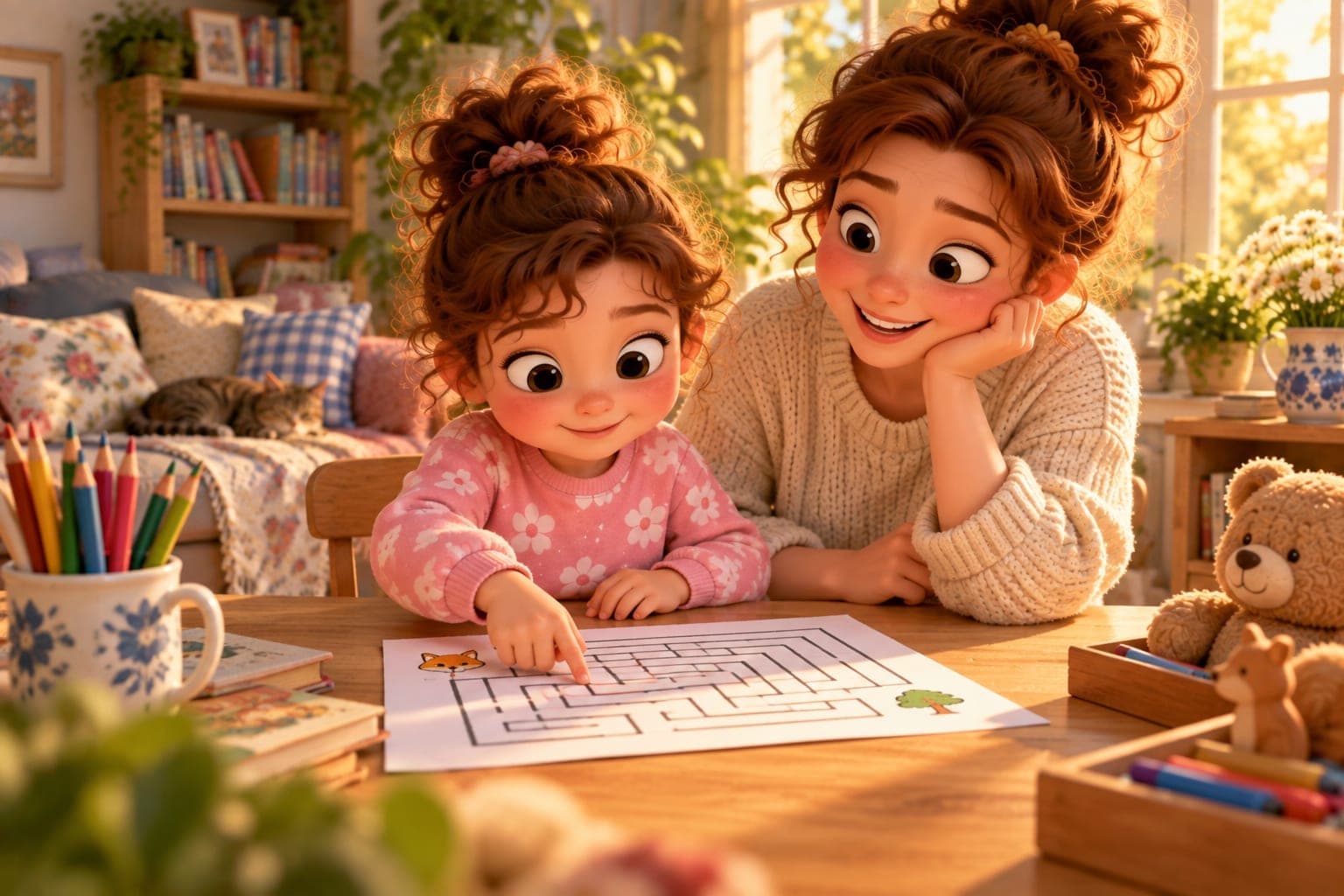
- Maze: your child traces the route with a finger first, then follows it with a crayon. Begin with two simple mazes for a 4-year-old, then try a small maze with an answer for ages 4–5.
- Sorting: buttons by color, blocks by shape, cutlery by type.
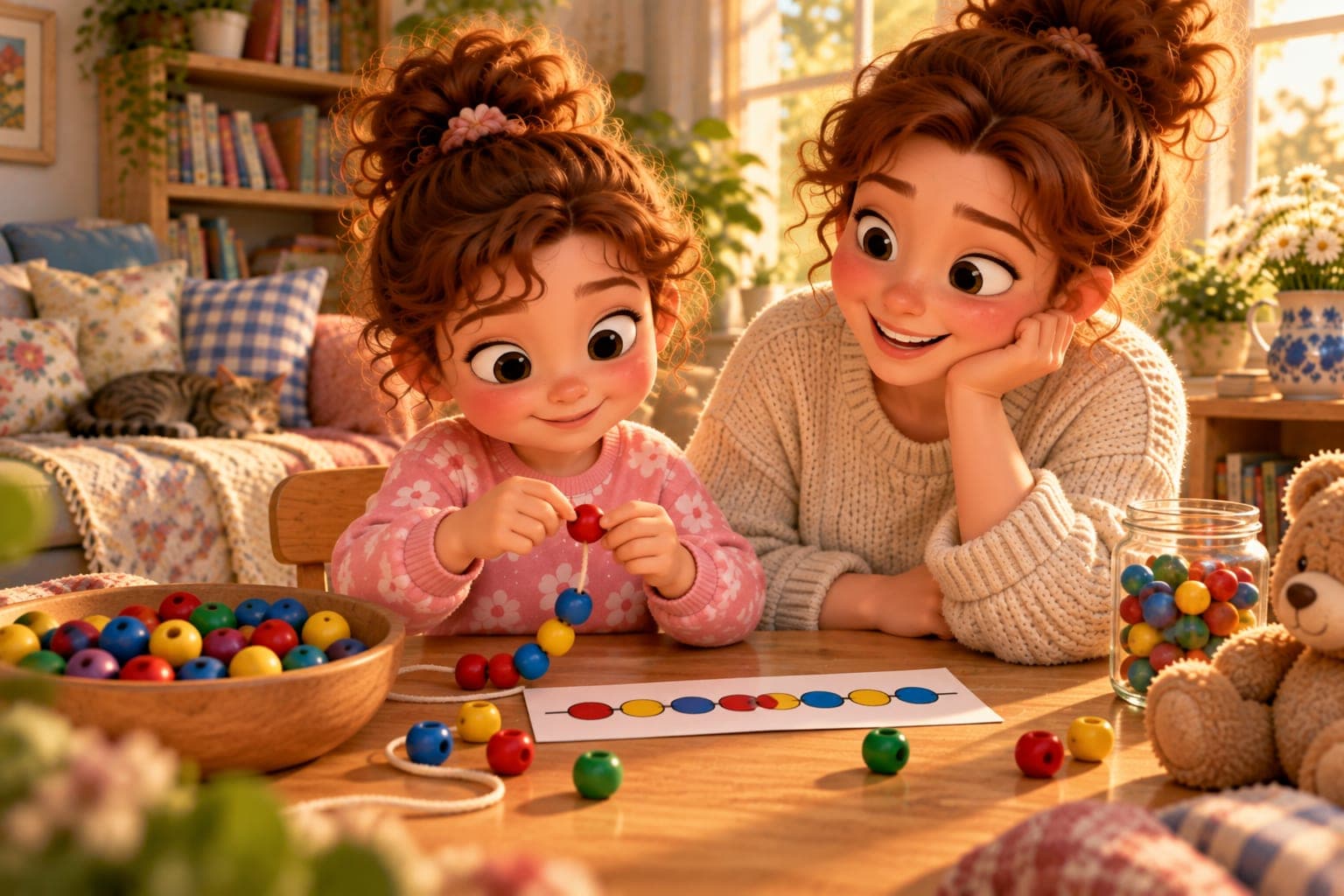
- Threading: large beads on a lace in a simple pattern such as red, blue, red.
- Puzzles: around 6–12 pieces for a 4-year-old, building gradually towards 24–30 pieces for a 6-year-old when appropriate.
- What’s Missing?: place a few objects on a tray, ask your child to close their eyes, and hide one. You can also use the short What’s Missing? game.
A One-Week Plan: 10 Minutes a Day
Day | Activity | What to Notice |
|---|---|---|
Monday | freeze dance | whether your child stops when the signal changes |
Tuesday | maze | whether they look ahead before drawing |
Wednesday | sorting buttons | whether they finish without repeated reminders |
Thursday | What’s Missing? | how many objects they remember |
Friday | threading a pattern | whether they keep the color sequence |
Weekend | puzzle together | whether they return to it after a break |
After a week, make one activity slightly harder: add more colors, lengthen the pattern, or choose a maze with more turns. You can also find age-matched activities in preschool — age 4 and preschool — age 5.
How Do You Prepare Your Child and the Environment?
- Turn off background television and radio. Even when your child is not looking at them, changing sounds can compete for attention.
- Keep only what is needed on the table for the current game.
- Give a clear ending cue: “Two more turns in the maze, then we’re going for a walk.” Preschoolers often manage transitions better when they know what comes next.
- Choose a good moment: after breakfast or a nap, rather than just before dinner when your child is hungry and tired.
The same principles apply to older school-age siblings, but study blocks can be longer. See how to improve a child’s concentration for age-based study routines.
How Do You Praise Concentration So Your Child Wants to Keep Trying?
Praise the effort and strategy, not only the result. “You kept looking for the route until you found it” tells your child more than “You’re so clever.” It highlights that staying with a task is something they can do and practise, even when the first attempt does not work.
What Mistakes Should You Avoid?
- Starting with a task that is too difficult. Repeated failure can quickly reduce willingness to try.
- Saying only “Focus!”. Your child may not know what action to take. Be specific instead: “Look at the bead colors.”
- Using a video as a reward halfway through. It can make it harder to return to a calm task.
- Comparing your child with other children. Attention develops at different rates.
- Forcing completion at any cost. It is often better to stop and return later.
When Should You Talk to a Professional?
Talk with your child’s preschool or childcare teacher and a healthcare or child-development professional if, over several months, your child struggles to focus even on favourite play, the difficulties are clear in more than one setting, or there are also marked concerns about speech, sleep, or relationships with other children. A professional can help decide whether this fits normal variation or deserves a closer look.
Sources
- Harvard University, Center on the Developing Child — Executive Function & Self-Regulation (a guide to planning and attention skills, with activities for children of different ages).
- American Academy of Pediatrics, HealthyChildren.org — Developmental Milestones: 4 to 5 Year Olds (typical development of 4–5-year-olds).