
Train on a Drawbridge
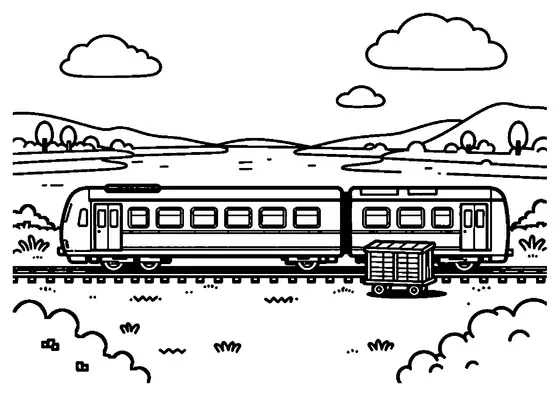
A passenger train moves over a waterway as a classic drawbridge allows rail traffic to cross safely above the canal.

A4 format (landscape), black outlines on a white background · for home and classroom use
All coloring pages: Train Coloring Pages
Similar coloring pages: Train Coloring Pages




What else can you print? Free, no account needed
Custom Name Coloring Pages
Enter your child's name to generate a custom coloring page featuring large outline letters to color and decorate.
Open generator →Connect the Dots Generator
Eight connect-the-dots pictures across three difficulty levels. Features faint outline guides for younger children and dots only for older kids.
Open generator →Printables
Worksheets, tracing lines, mazes and dot-to-dots in A4.
Browse printables →
Passenger Train Crossing a Canal Drawbridge
A passenger train travels along railway tracks that span across a canal. The drawbridge creates a sturdy connection over the water, allowing trains to cross while remaining capable of opening for passing boats. Floating buoys rest in the canal water near the bridge structure.
How Railway Drawbridges Function
Drawbridges built for trains require heavy steel locking mechanisms to support the immense weight of a moving locomotive. Unlike road bridges, railway drawbridges must align tracks precisely down to fractions of an inch when lowered so the wheels can transition smoothly without derailing.
Colors of Trains and Canal Drawbridges
- Passenger train cars: Silver, blue, or red stainless steel bodies
- Steel drawbridge frame: Dark gray, green, or rust-colored protective paint
- Waterway buoys: Bright yellow, orange, or white for maritime visibility
- Canal water: Deep blue, green, or murky brown depending on depth