
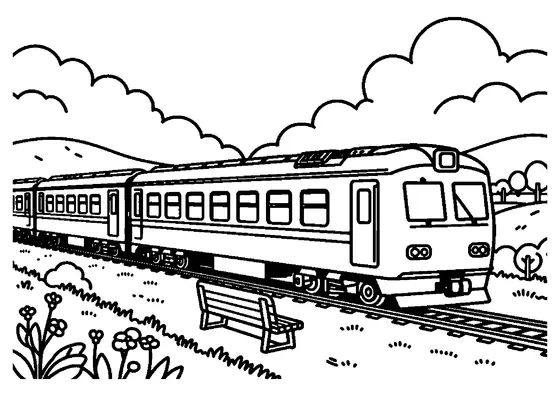
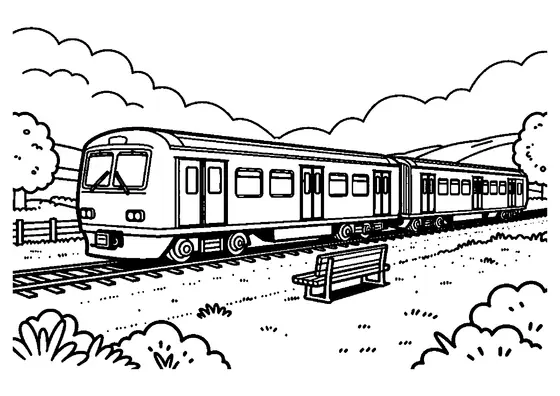
Passenger Train by a Reedy Lake
Passenger trains travel along quiet lake shorelines lined with dense clusters of tall marsh reeds.

A4 format (landscape), black outlines on a white background · for home and classroom use
All coloring pages: Train Coloring Pages
Similar coloring pages: Train Coloring Pages




What else can you print? Free, no account needed
Custom Name Coloring Pages
Enter your child's name to generate a custom coloring page featuring large outline letters to color and decorate.
Open generator →Connect the Dots Generator
Eight connect-the-dots pictures across three difficulty levels. Features faint outline guides for younger children and dots only for older kids.
Open generator →Printables
Worksheets, tracing lines, mazes and dot-to-dots in A4.
Browse printables →
Passenger Trains Traveling Along Freshwater Lake Shores
Scenic passenger rail lines often follow the low-elevation topography of freshwater lakes. A large passenger train with wide windows moves along tracks laid along a calm lake shore filled with clusters of tall reeds. Traveling beside lakes offers passengers peaceful views of tranquil water surfaces and wetland plants.
Freshwater Lake Wetland Ecosystems
Reeds are tall perennial grasses that grow in shallow freshwater along lake margins, helping filter water by absorbing excess nutrients and sediment. Their dense root systems stabilize shoreline soil, protecting lake banks against wave erosion caused by wind or passing watercraft. Wetlands surrounding lakes also serve as vital resting habitat for migratory waterfowl during spring and autumn migrations.
Real Colors of Lake Shore Passenger Trains and Reeds
- Passenger train body: metallic silver, classic navy blue, or warm maroon
- Train window glass: soft sky blue or dark charcoal tint
- Lake water surface: deep blue, mirror-like sky blue, or dark teal
- Freshwater reeds: golden tan in dry seasons or bright emerald green in summer
- Lakeside shoreline tracks: dark gravel ballast with gray steel rails