
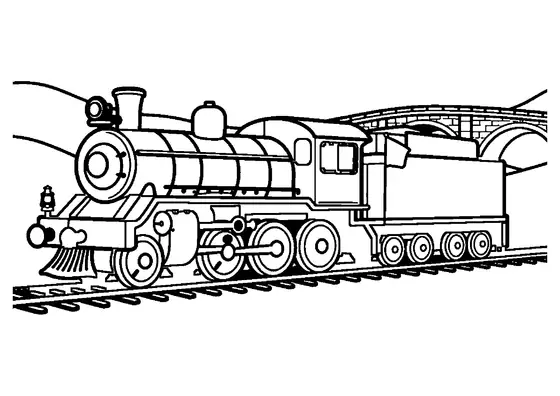
Steam Locomotive Pulling Cars into an Old Tunnel
A vintage steam engine pulls passenger cars along a mountain railway right as it approaches a stone tunnel entrance.

A4 format (landscape), black outlines on a white background · for home and classroom use
All coloring pages: Train Coloring Pages
Similar coloring pages: Train Coloring Pages




What else can you print? Free, no account needed
Custom Name Coloring Pages
Enter your child's name to generate a custom coloring page featuring large outline letters to color and decorate.
Open generator →Connect the Dots Generator
Eight connect-the-dots pictures across three difficulty levels. Features faint outline guides for younger children and dots only for older kids.
Open generator →Printables
Worksheets, tracing lines, mazes and dot-to-dots in A4.
Browse printables →
Steam Locomotive on a Mountain Railway
A classic steam locomotive travels along a mountain track while entering an arched stone tunnel. The train pulls several attached cars along the elevated railway. Massive stone blocks form the entrance of the mountain tunnel built into the rocky slopes. Elevated mountain terrain frames the rail route.
How Steam Locomotives Work
Steam trains rely on burning coal or wood inside a firebox to boil water and produce high-pressure steam. This expanding steam drives heavy pistons back and forth, turning the large driving wheels connected by steel rods. The iconic puff of white cloud coming from the smoke stack is actually a mixture of exhaust steam and smoke.
Real Colors of Vintage Steam Trains
- Locomotive Body: Glossy black, dark green, or deep red
- Stone Tunnel: Weathered gray, brown, and tan masonry
- Train Wheels: Steel gray or metallic silver
- Mountain Rocks: Natural shades of slate gray, beige, and dark brown