
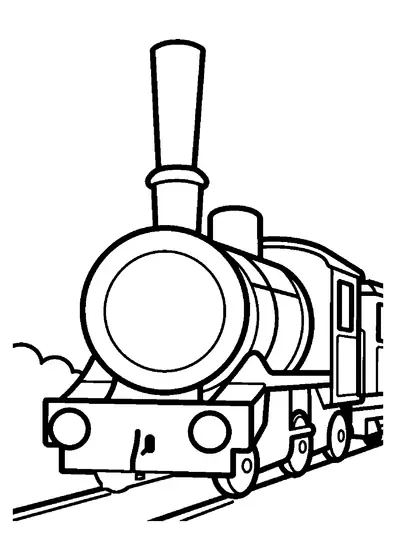
Side View Steam Engine Cab
A side view shows a complete steam locomotive with its driver cab, boiler, smokestack, and wheels.

A4 format (landscape), black outlines on a white background · for home and classroom use
All coloring pages: Train Coloring Pages
Similar coloring pages: Train Coloring Pages



What else can you print? Free, no account needed
Custom Name Coloring Pages
Enter your child's name to generate a custom coloring page featuring large outline letters to color and decorate.
Open generator →Connect the Dots Generator
Eight connect-the-dots pictures across three difficulty levels. Features faint outline guides for younger children and dots only for older kids.
Open generator →Printables
Worksheets, tracing lines, mazes and dot-to-dots in A4.
Browse printables →
Steam Locomotive Cab and Boiler Anatomy
A classic steam train engine displays its primary mechanical sections from the side, including the enclosed driver cab, horizontal boiler, tall smokestack, and large steel driving wheels. The entire locomotive structure connects together to transform boiling water into powerful movement along the iron rails.
Historical Facts About Steam Engines
Steam locomotives rely on a coal-fired furnace inside the boiler to heat water into high-pressure steam, which pushes heavy pistons connected directly to the drive wheels. The driver cab at the rear houses levers, pressure gauges, and valves that allow the engineer to control speed and braking. Smokestacks release exhaust steam mixed with smoke high into the air to maintain airflow through the firebox.
Authentic Colors of Steam Locomotives
- Main Boiler Cylinder: Matte black, dark green, or graphite blue
- Smokestack and Firebox: Dark charcoal black steel
- Driver Cab Exterior: Black, deep maroon, or navy paintwork
- Train Drive Wheels: Steel gray with silver metal rims
- Cab Interior Controls: Brass valves and iron handles