
Narrow-Gauge Train in the Fields
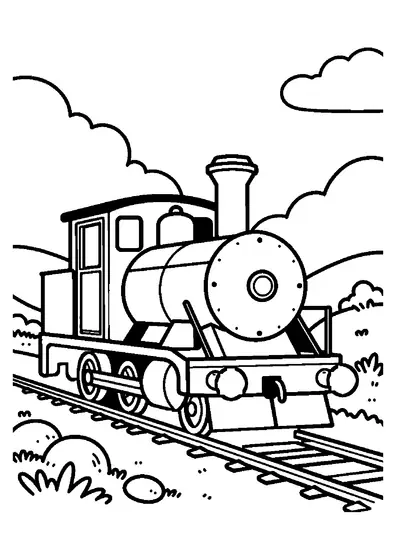
A compact narrow-gauge steam locomotive hauls a full line of small railcars across open countryside framed by fences and clouds.

A4 format (landscape), black outlines on a white background · for home and classroom use
All coloring pages: Train Coloring Pages
Similar coloring pages: Train Coloring Pages




What else can you print? Free, no account needed
Custom Name Coloring Pages
Enter your child's name to generate a custom coloring page featuring large outline letters to color and decorate.
Open generator →Connect the Dots Generator
Eight connect-the-dots pictures across three difficulty levels. Features faint outline guides for younger children and dots only for older kids.
Open generator →Printables
Worksheets, tracing lines, mazes and dot-to-dots in A4.
Browse printables →
Compact Steam Train on Rural Tracks
Narrow-gauge railways rely on track rails set closer together than standard railroad lines, enabling steam locomotives to navigate tight curves easily. The steam engine pulls several small passenger or freight cars past rolling fields, wooden boundary fences, and fluffy clouds.
Historical Importance of Narrow Tracks
Railroad builders laid narrow-gauge tracks in mountainous or rural areas because narrow railbeds cost much less to dig and build. Small steam engines operating on these systems helped haul timber, minerals, and farm goods from distant countryside locations to central towns.
Colors of Rural Narrow-Gauge Railways
- Steam locomotive: deep black, dark green, or dark red iron finish
- Train cars: wooden brown, dark red, or navy blue painted wood
- Country fields: golden yellow wheat or lush green pasture
- Fence posts: weathered brown wood
- Fluffy clouds: bright white against a light blue sky