
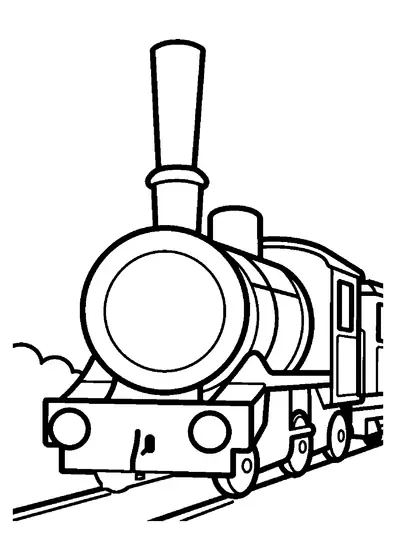
Classic Train Engine Front
A head-on view of a vintage steam engine displays its prominent central headlight, heavy front coupler, and round buffer plates.

A4 format (portrait), black outlines on a white background · for home and classroom use
All coloring pages: Train Coloring Pages
Similar coloring pages: Train Coloring Pages


What else can you print? Free, no account needed
Custom Name Coloring Pages
Enter your child's name to generate a custom coloring page featuring large outline letters to color and decorate.
Open generator →Connect the Dots Generator
Eight connect-the-dots pictures across three difficulty levels. Features faint outline guides for younger children and dots only for older kids.
Open generator →Printables
Worksheets, tracing lines, mazes and dot-to-dots in A4.
Browse printables →
Frontal Architecture of a Vintage Locomotive
This full front view captures a classic steam locomotive from a head-on perspective. The layout features a centered high-mounted headlight, a central coupling mechanism, and protective round bumpers mounted on the lower front beam.
Function of Front Bumpers and Headlights on Trains
The round metal buffer plates mounted on the front of vintage engines were fitted with heavy internal springs to absorb impact forces when coupling to rail cars. The large central headlight provided vital illumination during night journeys, allowing engine crews to spot track hazards far ahead in dark rural areas.
Standard Color Choices for Vintage Engine Fronts
- Front boiler plate: matte black, dark gray, or gunmetal
- Headlight housing: brass, polished chrome, or black with yellow lens
- Buffer plates: black steel with silver contact surfaces
- Coupler assembly: rusty iron, dark gray, or black