
Cement Tanker Train Car
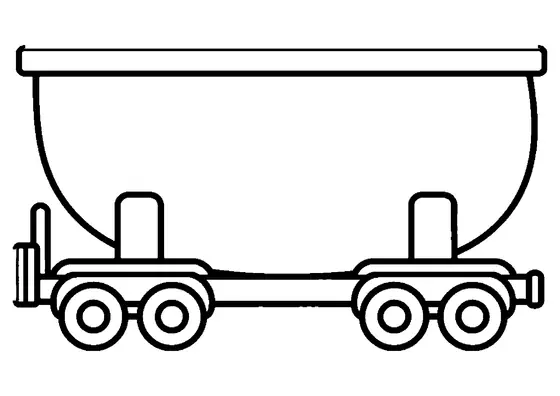
A bulky industrial cement car features a rounded tank body topped with an oversized hatch for loading dry construction materials.

A4 format (landscape), black outlines on a white background · for home and classroom use
All coloring pages: Train Coloring Pages
Similar coloring pages: Train Coloring Pages


What else can you print? Free, no account needed
Custom Name Coloring Pages
Enter your child's name to generate a custom coloring page featuring large outline letters to color and decorate.
Open generator →Connect the Dots Generator
Eight connect-the-dots pictures across three difficulty levels. Features faint outline guides for younger children and dots only for older kids.
Open generator →Printables
Worksheets, tracing lines, mazes and dot-to-dots in A4.
Browse printables →
Bulky Cement Tanker Car
Heavy-duty cement tanker cars are specialized freight vehicles built to haul dry powdered cement, fly ash, and silica to construction projects and concrete plants. The prominent rounded tank structure includes a large top hatch where cement powder is loaded from overhead silos. Its short, sturdy design accommodates high-density loads while maintaining stability along railway tracks.
Facts About Railway Cement Transport
Dry cement powder is remarkably heavy for its volume, which is why cement tankers are typically shorter than standard boxcars to keep total weight within axle limits. The top hatch seals tightly with rubber gaskets to prevent any rain or atmospheric humidity from reaching the dry powder inside. When unloading, pressurized air is injected into the bottom of the tank to fluidize the powder so it flows easily into facility pipelines.
Real-World Colors of Cement Tankers
- Main rounded tank: Metallic silver, off-white, or light concrete gray
- Top hatch assembly: Dark steel gray, black, or galvanized silver
- Access ladder and walkways: Steel gray or industrial yellow
- Lower chassis and frame: Dark brown, black, or deep burgundy
- Railway wheels: Charcoal, slate gray, or dark metallic brown