
Arctic Bay Express Train
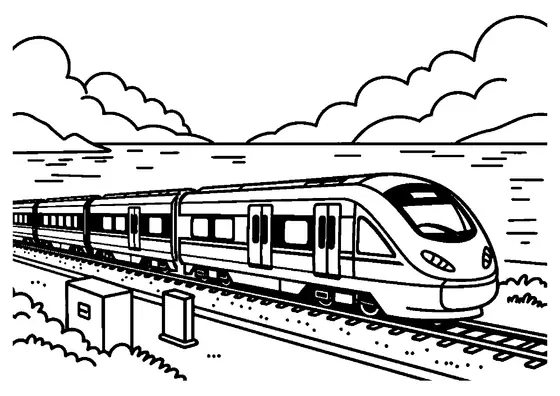
A modern express train glides along a coastal railway track bordering a cold northern bay filled with floating ice.

A4 format (landscape), black outlines on a white background · for home and classroom use
All coloring pages: Train Coloring Pages
Similar coloring pages: Train Coloring Pages




What else can you print? Free, no account needed
Custom Name Coloring Pages
Enter your child's name to generate a custom coloring page featuring large outline letters to color and decorate.
Open generator →Connect the Dots Generator
Eight connect-the-dots pictures across three difficulty levels. Features faint outline guides for younger children and dots only for older kids.
Open generator →Printables
Worksheets, tracing lines, mazes and dot-to-dots in A4.
Browse printables →
High-Speed Train Along an Arctic Coastline
A modern express train moves past a polar bay bordered by coastal mountain peaks. Massive icebergs drift through the frigid coastal water near the shoreline. A heavy supply crate sits near the cold coastal train line.
Arctic Transportation and Ice Formation
High-speed trains operating in extreme polar regions use special heating systems to prevent switches and brake lines from freezing solid. Icebergs in northern bays originate from giant glaciers that break off and float into the ocean, where salt water slows down their melting process.
Colors of Arctic Landscapes and Trains
- Express train body: White, metallic gray, or dark blue streamline coating
- Floating icebergs: Ice blue, pure white, and translucent turquoise hues
- Mountain slopes: Dark gray rock covered with pale white snow caps
- Supply crate: Weathered wooden tan or industrial steel orange