
Female Train Driver Steering a Train
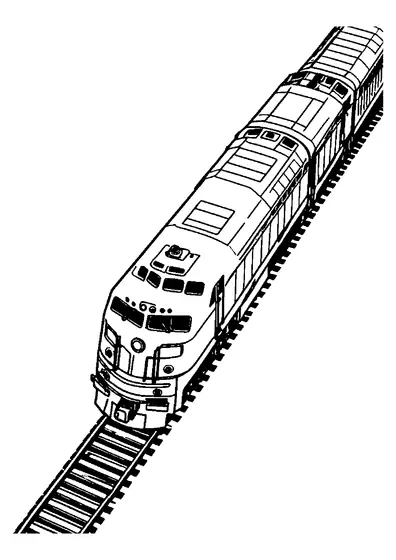
A large locomotive is shown from the side on railway tracks, with an empty cab window and no driver visible.

A4 format (landscape), black outlines on a white background · for home and classroom use
All coloring pages: Train Coloring Pages
Similar coloring pages: Train Coloring Pages




What else can you print? Free, no account needed
Custom Name Coloring Pages
Enter your child's name to generate a custom coloring page featuring large outline letters to color and decorate.
Open generator →Connect the Dots Generator
Eight connect-the-dots pictures across three difficulty levels. Features faint outline guides for younger children and dots only for older kids.
Open generator →Printables
Worksheets, tracing lines, mazes and dot-to-dots in A4.
Browse printables →
A locomotive on the railway
The train fills the scene in a side view, making its body, cab, wheels, and position on the rails the main focus. The cab window is unoccupied, so the picture does not show a train driver or any passengers. Apart from the tracks below the locomotive, there are no buildings, signs, people, or landscape features in the background.
How a locomotive follows the tracks
Train wheels have shaped edges that help keep them aligned with the rails. The rails guide the locomotive along a fixed route rather than allowing it to steer freely like a road vehicle. A working train is controlled from the cab, where the driver monitors speed, signals, and conditions ahead.
Real-life colors for the locomotive and track
- Locomotive body: may be red, blue, green, yellow, silver, black, or a company-specific combination
- Cab windows: transparent with pale blue, gray, or dark reflections
- Train wheels: usually dark gray, black, or weathered metal
- Steel rails: silver-gray on frequently used surfaces, with reddish-brown rust along exposed areas
- Undercarriage: commonly black, charcoal gray, or dark brown from use