
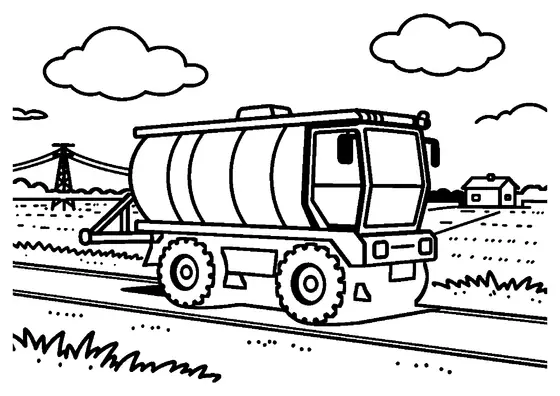
Tractor with a Rotary Rake Making Hay Windrows
A modern farm tractor pulls a rotary rake across a wide field to gather dried forage into long windrows.

A4 format (landscape), black outlines on a white background · for home and classroom use
All coloring pages: Combine Harvester Coloring Pages
Similar coloring pages: Combine Harvester Coloring Pages



What else can you print? Free, no account needed
Custom Name Coloring Pages
Enter your child's name to generate a custom coloring page featuring large outline letters to color and decorate.
Open generator →Connect the Dots Generator
Eight connect-the-dots pictures across three difficulty levels. Features faint outline guides for younger children and dots only for older kids.
Open generator →Printables
Worksheets, tracing lines, mazes and dot-to-dots in A4.
Browse printables →
Windrow Formation During Hay Harvesting
Raking is an essential phase in forage production where dry grass scattered across a field is swept into neat parallel lines called windrows. This organized arrangement enables balers or forage wagons to collect the crop efficiently in a single pass.
Engineering Principles of Rotary Rakes
Rotary rakes use horizontal wheels fitted with angled steel arms that sweep dried crop material inward without disturbing the soil layer. The gentle sweeping action prevents leaves from breaking off fragile plants, preserving valuable protein content inside the harvested forage.
Colors of Field Machinery and Hay Rows
- Agricultural tractor: Bright orange, red, or dark blue paint
- Rotary rake frame: Red steel with silver sweeping arms
- Accumulated hay windrows: Golden yellow, tan, or dry olive green
- Open field ground: Yellowish grass stubble with light brown soil
- Tractor wheel rims: White, yellow, or silver metal