
Seed Drill in a Field by the Canal
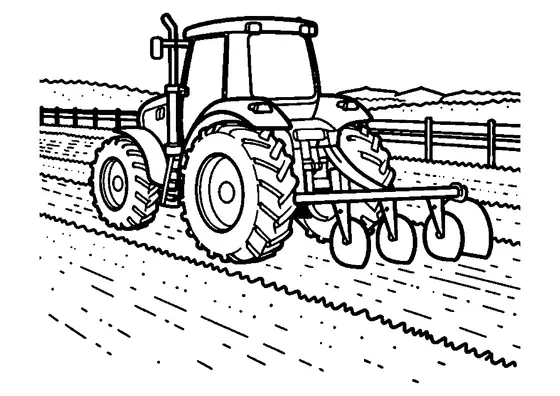
A tractor and wide seed drill work across a prepared autumn field beside an irrigation canal.

A4 format (landscape), black outlines on a white background · for home and classroom use
All coloring pages: Combine Harvester Coloring Pages
Similar coloring pages: Combine Harvester Coloring Pages


What else can you print? Free, no account needed
Custom Name Coloring Pages
Enter your child's name to generate a custom coloring page featuring large outline letters to color and decorate.
Open generator →Connect the Dots Generator
Eight connect-the-dots pictures across three difficulty levels. Features faint outline guides for younger children and dots only for older kids.
Open generator →Printables
Worksheets, tracing lines, mazes and dot-to-dots in A4.
Browse printables →
Sowing a field after harvest
The agricultural scene centers on a modern seed drill attached to a tractor in a prepared field. Its broad working section places seed across the soil while the canal runs beside the farmland. Seed drills help distribute seed in organized rows and at a controlled depth, giving young plants a more consistent start than seed scattered unevenly by hand.
How careful sowing supports a new crop
Good contact between seed and soil helps the seed absorb the moisture needed for germination. Farmers select sowing depth according to the crop, soil, and local conditions because a seed placed too deeply may struggle to emerge. Irrigation canals carry water through farming areas where rainfall alone may not reliably meet crop needs.
Real-world colors around the seed drill
- Prepared soil: dark brown, reddish brown, or muted tan
- Canal water: blue-green, brownish, or reflective gray depending on conditions
- Seed drill frame: commonly red, green, blue, yellow, or painted black
- Tractor body: red, green, blue, orange, or another manufacturer color
- Tires: black rubber with gray or painted wheel rims