
Baler by a Stone Wall
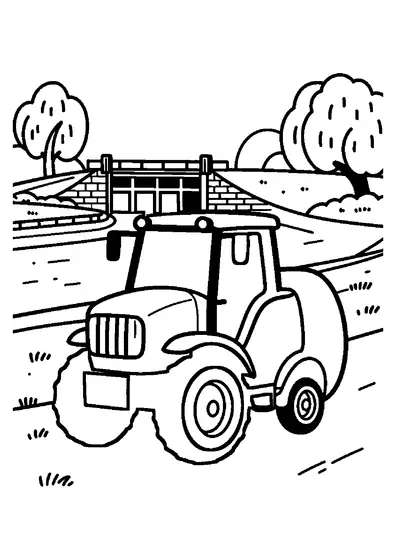
A tractor pulls a baler across a rolling field, forming straw into a bale near a stone wall.

A4 format (landscape), black outlines on a white background · for home and classroom use
All coloring pages: Combine Harvester Coloring Pages
Similar coloring pages: Combine Harvester Coloring Pages


What else can you print? Free, no account needed
Custom Name Coloring Pages
Enter your child's name to generate a custom coloring page featuring large outline letters to color and decorate.
Open generator →Connect the Dots Generator
Eight connect-the-dots pictures across three difficulty levels. Features faint outline guides for younger children and dots only for older kids.
Open generator →Printables
Worksheets, tracing lines, mazes and dot-to-dots in A4.
Browse printables →
A baler working along the stone wall
This farm setting shows a tractor towing a baler through a hilly field bordered by a stone wall. The baler gathers loose straw left after a cereal crop has been harvested, compresses it, and shapes it into a bale. Baling makes the material easier to handle, transport, and store than scattered straw lying across the field.
Why farms make straw bales
Straw consists mainly of the dry stalks left after grain has been removed from crops such as wheat or barley. Farmers may use it for animal bedding, mix it into other farm materials, or sell it for practical uses. Traditional field walls are often built from locally available stone and can remain useful boundaries for many years.
Natural and common colors in this farm setting
- Dry straw: pale yellow, gold, or light tan
- Tractor body: commonly red, green, blue, or another brand color
- Baler: red, green, yellow, or painted metal
- Tractor and baler tires: black rubber
- Stone wall: gray, brown, buff, or rusty red depending on the rock