
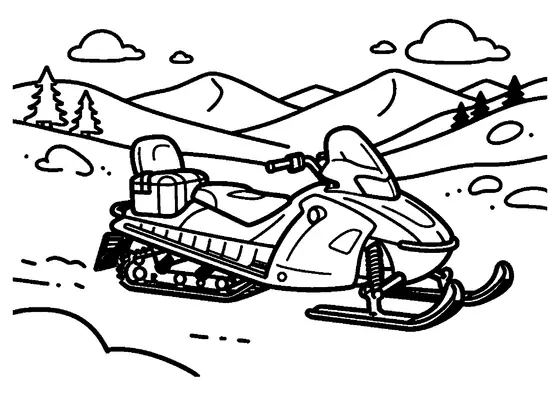
Tracked rescue vehicle in an angled view
Shown at a three-quarter angle on snow, this tracked emergency machine is built for difficult winter terrain.

A4 format (landscape), black outlines on a white background · for home and classroom use
All coloring pages: Firefighter and Police Coloring Pages
Similar coloring pages: Firefighter and Police Coloring Pages


What else can you print? Free, no account needed
Custom Name Coloring Pages
Enter your child's name to generate a custom coloring page featuring large outline letters to color and decorate.
Open generator →Connect the Dots Generator
Eight connect-the-dots pictures across three difficulty levels. Features faint outline guides for younger children and dots only for older kids.
Open generator →Printables
Worksheets, tracing lines, mazes and dot-to-dots in A4.
Browse printables →
Tracked Emergency Machinery in Deep Snow
Tracked rescue vehicles are specialized transport machines built to reach isolated alpine areas where regular wheeled trucks cannot travel. This angled illustration displays continuous rubber tracks surrounding its lower frame and a fully enclosed passenger cabin. The design allows search crews to navigate through soft snow and icy mountain slopes.
How Rubber Tracks Transport Mountain Rescue Teams
Unlike traditional steel tracks on construction machinery, heavy rubber tracks allow rescue vehicles to travel smoothly across both frozen trails and paved mountain roads. The wide continuous treads float over deep powder snow without sinking into hidden drifts. These vehicles frequently operate in extreme sub-zero weather, delivering medical responders and gear to remote wilderness locations.
Realistic Colors of a Tracked Rescue Machine
- Rescue cabin body: International orange or neon yellow with red accent stripes
- Rubber continuous tracks: Matte black or dark gray rubberized compound
- Windows and cab windshield: Light sky blue tint with black frame seals
- Track support rollers: Steel gray or black painted metal hubs
- Underlying snow terrain: Pure white with soft gray shadows