
Cross-Country Skis by a Log Cabin
Cross-country skis and ski poles lean against a rustic wooden cabin surrounded by a peaceful snow-covered forest.

A4 format (portrait), black outlines on a white background · for home and classroom use
All coloring pages: Winter Sports Coloring Pages
Similar coloring pages: Winter Sports Coloring Pages

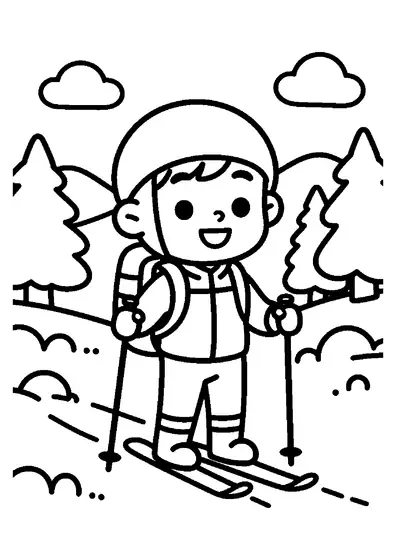

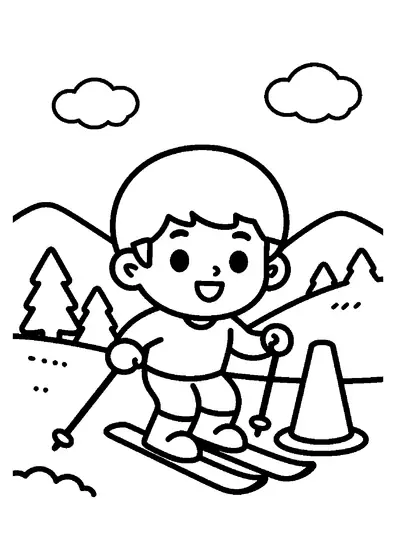

What else can you print? Free, no account needed
Custom Name Coloring Pages
Enter your child's name to generate a custom coloring page featuring large outline letters to color and decorate.
Open generator →Connect the Dots Generator
Eight connect-the-dots pictures across three difficulty levels. Features faint outline guides for younger children and dots only for older kids.
Open generator →Printables
Worksheets, tracing lines, mazes and dot-to-dots in A4.
Browse printables →
Cross-Country Skiing Equipment at a Forest Cabin
A set of long cross-country skis and matching poles stand outside a wooden log cabin in a quiet forest environment. Nordic skiing routes pass through quiet woodlands where wooden shelters provide rest stops for skiers exploring snowy trails.
History and Purpose of Cross-Country Skis
Cross-country skiing originated thousands of years ago in Scandinavian countries as a necessary form of winter transportation across deep snowfields. Unlike downhill alpine skis, cross-country skis are long, narrow, and lightweight, allowing skiers to glide over flat terrain using toe-only boot bindings and long poles for propulsion.
Natural Colors of a Nordic Winter Scene
- Log cabin walls: natural brown wood or weathered gray timber
- Skis and poles: bright red, black, or metallic silver
- Ski pole grips: black rubber or cork brown
- Pine forest trees: deep evergreen with white snow dusting
- Forest ground: solid white snowpack