
Speed Skater on the Straight Track
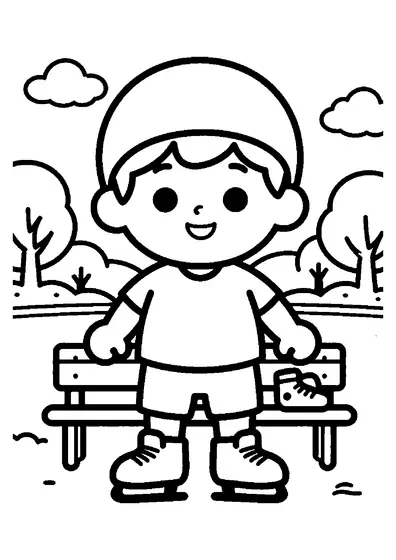
A young speed skater wearing a helmet stands ready on the straight section of an ice track.

A4 format (portrait), black outlines on a white background · for home and classroom use
All coloring pages: Winter Sports Coloring Pages
Similar coloring pages: Winter Sports Coloring Pages


What else can you print? Free, no account needed
Custom Name Coloring Pages
Enter your child's name to generate a custom coloring page featuring large outline letters to color and decorate.
Open generator →Connect the Dots Generator
Eight connect-the-dots pictures across three difficulty levels. Features faint outline guides for younger children and dots only for older kids.
Open generator →Printables
Worksheets, tracing lines, mazes and dot-to-dots in A4.
Browse printables →
Speed Skating on the Straightaway Track
Speed skating takes place on long oval ice tracks designed for maximum momentum and velocity. The straight sections of the track allow skaters to build power through long, rhythmic strides before entering sharp banked turns.
Specialized Design of Speed Skating Blades
Speed skaters use long, straight steel blades that extend beyond the toe and heel of the boot. Many modern setups use clap skates, where the blade hinges at the toe to remain in contact with the ice longer, yielding extra propulsion on straightaways.
Realistic Colors of Speed Skating Equipment
- Ice track surface: clear pale white with painted lane markers
- Skater's racing helmet: glossy white, bright red, or metallic blue
- Speed skater suit: navy blue, charcoal gray, or team colors like red and black
- Speed skate blades: polished silver stainless steel