
Cross-Country Skier by the Bridge
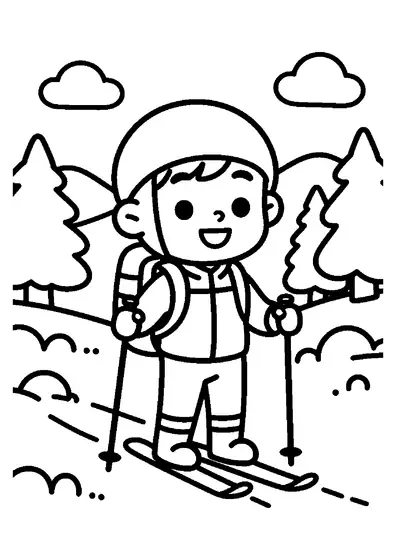
A young skier explores a quiet winter trail surrounded by snow-covered trees and a small wooden bridge.

A4 format (landscape), black outlines on a white background · for home and classroom use
All coloring pages: Winter Sports Coloring Pages
Similar coloring pages: Winter Sports Coloring Pages



What else can you print? Free, no account needed
Custom Name Coloring Pages
Enter your child's name to generate a custom coloring page featuring large outline letters to color and decorate.
Open generator →Connect the Dots Generator
Eight connect-the-dots pictures across three difficulty levels. Features faint outline guides for younger children and dots only for older kids.
Open generator →Printables
Worksheets, tracing lines, mazes and dot-to-dots in A4.
Browse printables →
Scenic Winter Trail for Cross-Country Skiing
A boy on cross-country skis stands beside a small wooden bridge built across a quiet stream bed in the woods. Snow blankets the forest trail around the skier, while winter trees frame the backdrop of this outdoor scene.
Fascinating Facts About Cross-Country Skiing
Cross-country skiing relies on human power rather than chairlifts or downhill slopes to glide across flat or rolling landscapes. Skis designed for distance trails are longer and narrower than downhill skis, allowing travelers to maintain balance while moving efficiently through deep snow. Wooden bridges on trail networks help skiers cross frozen creeks without damaging their equipment.
Authentic Colors of Winter Trails and Gear
- Wooden bridge: weathered brown or gray timber
- Skis and poles: bright red, blue, or yellow fiberglass
- Winter jacket: dark navy, emerald green, or crimson
- Forest trees: deep evergreen foliage and bare brown branches
- Snow cover: pure white with soft blue shadows