
Flag Football Receiver
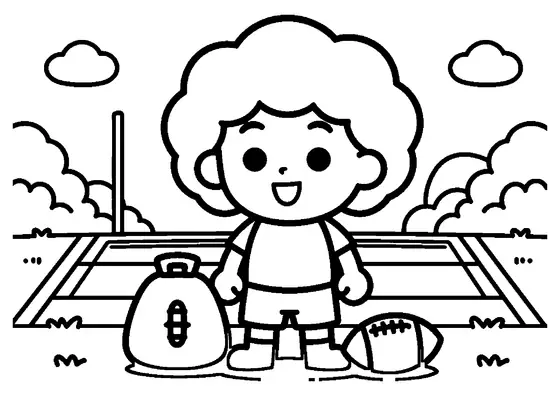
A youth flag football wide receiver wears protective headgear and a socketed flag belt during a non-contact drill.

A4 format (portrait), black outlines on a white background · for home and classroom use
All coloring pages: Sports Coloring Pages
Similar coloring pages: Sports Coloring Pages



What else can you print? Free, no account needed
Custom Name Coloring Pages
Enter your child's name to generate a custom coloring page featuring large outline letters to color and decorate.
Open generator →Connect the Dots Generator
Eight connect-the-dots pictures across three difficulty levels. Features faint outline guides for younger children and dots only for older kids.
Open generator →Printables
Worksheets, tracing lines, mazes and dot-to-dots in A4.
Browse printables →
Flag Football Receiver Gear
Flag football offers a non-contact alternative to tackle football, replacing physical tackles with pulling a flag attached to a player's waist. Wide receivers wear adjustable belts carrying flexible plastic flags along with protective helmets designed for head safety during practice sessions on the field.
Knowledge About Flag Football Equipment
Flag football belts feature quick-release clips or socketed flags that pop loose when pulled with firm pressure. While tackle football relies on heavy shoulder armor, flag football players use lightweight clothing and specialized helmets to maintain maximum speed while running pass routes.
Natural Colors of Flag Football Gear
- Flag belt: bright red, neon yellow, or electric blue flags attached to a black or white belt strap
- Receiver helmet: solid team colors like navy blue, metallic silver, or white with dark face guards
- Football: pebble-grained brown leather or synthetic composite with white laces
- Player uniform: vibrant athletic colors including red, royal blue, green, or yellow