
Orbital Telescope from the Side
An orbital telescope travels high above Earth's atmosphere to capture clear photos of distant stars.

A4 format (landscape), black outlines on a white background · for home and classroom use
All coloring pages: Planet and Solar System Coloring Pages
Similar coloring pages: Planet and Solar System Coloring Pages


What else can you print? Free, no account needed
Custom Name Coloring Pages
Enter your child's name to generate a custom coloring page featuring large outline letters to color and decorate.
Open generator →Connect the Dots Generator
Eight connect-the-dots pictures across three difficulty levels. Features faint outline guides for younger children and dots only for older kids.
Open generator →Printables
Worksheets, tracing lines, mazes and dot-to-dots in A4.
Browse printables →
Components of an Orbital Space Telescope
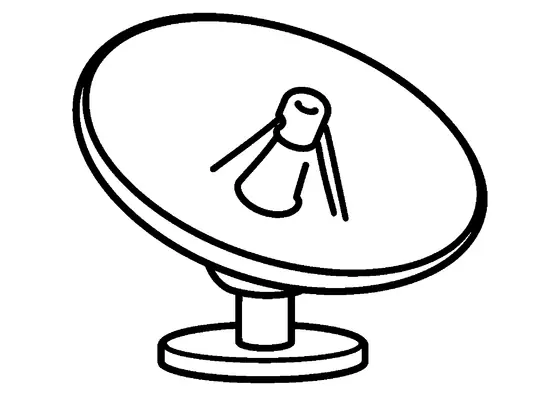
An orbital space telescope features a long cylindrical tube designed to focus incoming starlight. Large solar panels extend from the side to generate electrical power continuously, while a high-gain antenna sends scientific data back to researchers.
Why Astronomy Works Better Above the Atmosphere
Atmospheric air currents and dust blur light coming from space, causing stars to twinkle when viewed from the ground. Placing a telescope into Earth orbit eliminates atmospheric disturbance completely. This allows astronomers to capture exceptionally sharp images of ancient nebulae and faint stellar nurseries.
Real Colors of an Orbital Telescope
- Telescope main tube: bright white thermal blankets or reflective silver foil
- Solar panel arrays: dark blue or charcoal solar cells with silver borders
- Communication antenna: metallic gray or stark white dish
- Interior aperture tube: deep matte black to absorb stray light