
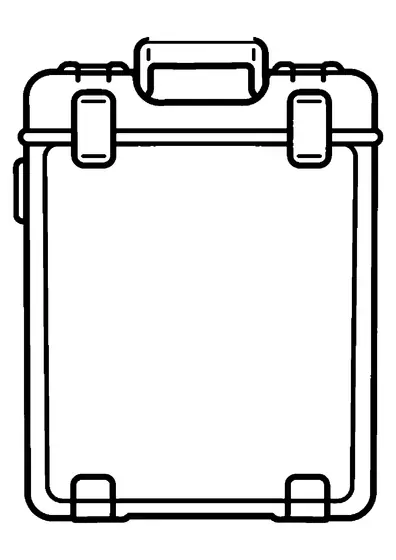
Moon Boot Sole View
A sturdy moon boot displays its heavy rubber tread pattern and reinforced upper structure designed for lunar terrain.

A4 format (portrait), black outlines on a white background · for home and classroom use
All coloring pages: Planet and Solar System Coloring Pages
Similar coloring pages: Planet and Solar System Coloring Pages




What else can you print? Free, no account needed
Custom Name Coloring Pages
Enter your child's name to generate a custom coloring page featuring large outline letters to color and decorate.
Open generator →Connect the Dots Generator
Eight connect-the-dots pictures across three difficulty levels. Features faint outline guides for younger children and dots only for older kids.
Open generator →Printables
Worksheets, tracing lines, mazes and dot-to-dots in A4.
Browse printables →
Lunar Exploration Boots
Lunar overboots are engineered to protect astronauts walking across sharp, abrasive lunar dust and jagged rocks. Featuring a broad upper section and a thick, deeply treaded sole, these boots provide traction and thermal protection against the extreme surface temperatures of celestial bodies.
Key Facts About Walking on the Moon
The dust on the Moon, known as regolith, consists of tiny crushed rock particles that are extremely abrasive and stick to equipment. To prevent heat from transferring from the lunar ground into the astronaut's feet, moon boots rely on silicone rubber soles with thick insulation gaps. During Apollo missions, astronauts left distinct tread marks in the lunar soil that remain unchanged today due to the lack of wind or liquid water.
Real Colors of Space Footwear
- Boot upper: Off-white thermal fabric with stainless steel woven mesh layers
- Treaded sole: Dark gray or blue silicone rubber designed for low temperatures
- Heel and toe guards: Metallic silver or matte gray protective caps
- Interior insulation: Multi-layer silver synthetic insulation material