
Gas Giant Meteorologist
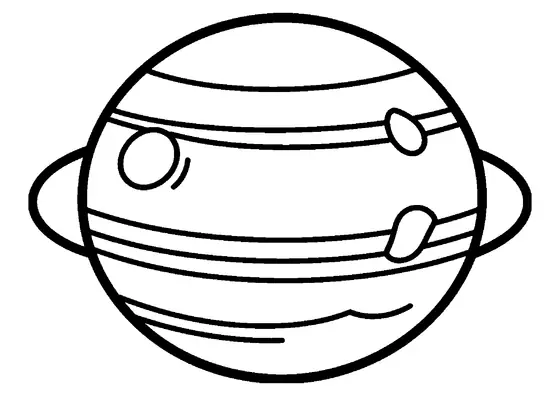
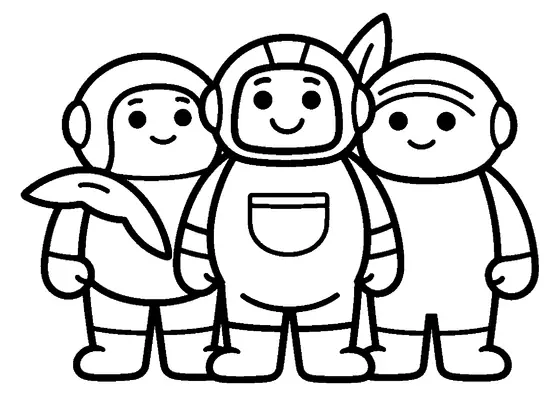
A space meteorologist monitors atmospheric conditions in front of a massive gas giant planet covered with wavy cloud bands.

A4 format (landscape), black outlines on a white background · for home and classroom use
All coloring pages: Planet and Solar System Coloring Pages
Similar coloring pages: Planet and Solar System Coloring Pages




What else can you print? Free, no account needed
Custom Name Coloring Pages
Enter your child's name to generate a custom coloring page featuring large outline letters to color and decorate.
Open generator →Connect the Dots Generator
Eight connect-the-dots pictures across three difficulty levels. Features faint outline guides for younger children and dots only for older kids.
Open generator →Printables
Worksheets, tracing lines, mazes and dot-to-dots in A4.
Browse printables →
Gas Giant Meteorology and Planetary Weather
A space meteorologist studies atmospheric movements, storm systems, and temperature shifts on large gas giant planets. These massive planets consist mostly of hydrogen and helium rather than solid ground, creating continuous wind patterns and swirling cloud layers across their outer atmospheres.
Atmospheric Dynamics of Giant Planets
Gas giants like Jupiter and Saturn do not possess a solid surface, meaning their atmospheric clouds form distinct horizontal bands due to rapid rotation. Thermal convection drives powerful winds that push cloud layers at varying speeds, creating long, persistent storm systems. Scientists observe these atmospheric movements to understand thermal balance and energy transfer within deep planetary clouds.
Real Colors of Gas Giant Planets and Space Gear
- Gas giant cloud bands: various shades of brown, orange, cream, and faint white depending on chemical composition
- Spacesuit fabric: bright white or silver designed to reflect intense radiation in open space
- Meteorologist visor: reflective gold or dark gray to block harmful UV light
- Deep space background: intense black punctuated by distant white stars