
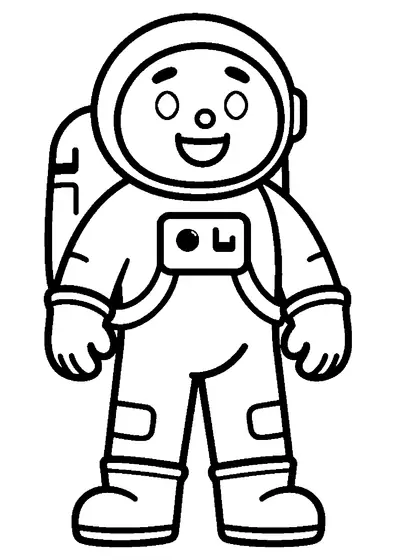
Side-view astronaut on the moon with visible face
An astronaut shown in profile explores the lunar surface in a heavy protective spacesuit.

A4 format (portrait), black outlines on a white background · for home and classroom use
All coloring pages: Planet and Solar System Coloring Pages
Similar coloring pages: Planet and Solar System Coloring Pages


What else can you print? Free, no account needed
Custom Name Coloring Pages
Enter your child's name to generate a custom coloring page featuring large outline letters to color and decorate.
Open generator →Connect the Dots Generator
Eight connect-the-dots pictures across three difficulty levels. Features faint outline guides for younger children and dots only for older kids.
Open generator →Printables
Worksheets, tracing lines, mazes and dot-to-dots in A4.
Browse printables →
Lunar Surface Exploration
Walking on the Moon requires specialized gear due to low gravity, extreme temperature swings, and sharp lunar dust. An astronaut standing on the lunar surface relies on a pressurized suit equipped with a clear visor section that allows facial visibility. Exploring lunar terrain provides scientists with vital clues about the early history of the Earth and Solar System.
Unique Conditions on the Lunar Surface
Because the Moon has no atmosphere to scatter light, the lunar sky remains pitch black even during daytime when sunlight illuminates the dusty ground. The gravity on the Moon is only one-sixth of Earth gravity, causing astronauts to move around using bounding, kangaroo-like hops instead of normal walking steps.
Real Colors on the Moon
- Lunar regolith soil: light gray, dark charcoal gray, and silver-gray dust
- Spacesuit body: crisp white with gray dust smudges around the boots
- Helmet visor: gold mirror tint or transparent glass
- Suit chest unit: white composite plastic with blue and red control valves