
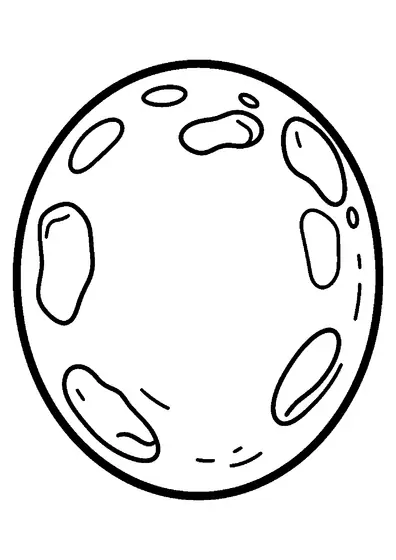
Angled View of the Moon
A spherical natural satellite showing prominent surface depressions and vast smooth plains from a tilted perspective.

A4 format (portrait), black outlines on a white background · for home and classroom use
All coloring pages: Planet and Solar System Coloring Pages
Similar coloring pages: Planet and Solar System Coloring Pages




What else can you print? Free, no account needed
Custom Name Coloring Pages
Enter your child's name to generate a custom coloring page featuring large outline letters to color and decorate.
Open generator →Connect the Dots Generator
Eight connect-the-dots pictures across three difficulty levels. Features faint outline guides for younger children and dots only for older kids.
Open generator →Printables
Worksheets, tracing lines, mazes and dot-to-dots in A4.
Browse printables →
The Spherical Moon and Its Surface Features
Viewed from an angle, Earth's natural satellite highlights its round three-dimensional form in space. Its dusty exterior features an uneven rim silhouette alongside extensive impact basins, round crater impressions, and broad dark basaltic plains formed by ancient volcanic activity.
How Lunar Landscapes Formed
The smooth dark areas visible on the Moon are known as maria, which is the Latin word for seas, even though they contain no liquid water. Millions of years ago, giant meteor strikes punctured the lunar crust, allowing molten basaltic lava to flood low-lying basins and cool into vast flat plains. Because the Moon has no atmosphere or weather to erode its surface, footprints and meteor craters remain preserved for millions of years.
Colors Found on Lunar Terrain
- Broad lunar plains: dark basalt gray or muted slate
- High elevation regions: light silver gray or dusty white
- Deep crater interiors: dark charcoal shadow
- Jagged rim highlights: bright off-white