
Rocket over a Geyser Field
A scientific spacecraft maneuvers high above active water plumes erupting from frozen moon terrain alongside a probe.

A4 format (landscape), black outlines on a white background · for home and classroom use
All coloring pages: Space and Rocket Coloring Pages
Similar coloring pages: Space and Rocket Coloring Pages



What else can you print? Free, no account needed
Custom Name Coloring Pages
Enter your child's name to generate a custom coloring page featuring large outline letters to color and decorate.
Open generator →Connect the Dots Generator
Eight connect-the-dots pictures across three difficulty levels. Features faint outline guides for younger children and dots only for older kids.
Open generator →Printables
Worksheets, tracing lines, mazes and dot-to-dots in A4.
Browse printables →
A Space Vehicle Navigating Cryovolcanic Terrain
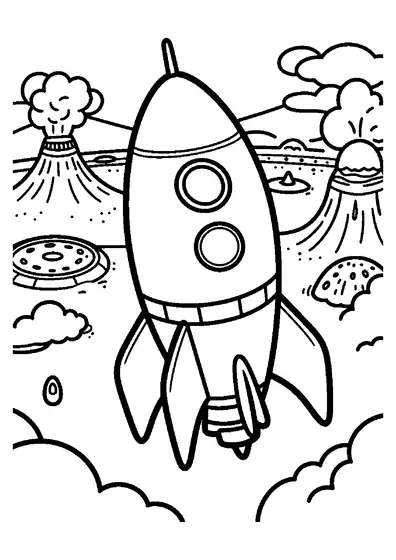
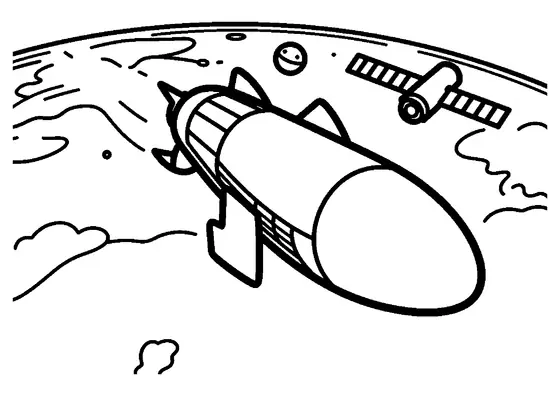
This scene depicts a rocket traveling across a quiet sector of a frozen moon. Deep below the surface, geological pressures force jets of water vapor and ice high into the thin atmosphere. A specialized measurement module operates nearby, gathering data on the composition of the eruptions while broad ice formations stretch across the landscape.
Astronomical Wonders of Outer Solar System Moons
Erupting liquid and gas jets on icy moons are known as cryovolcanoes. Instead of molten rock, these formations spew water, ammonia, or methane that instantly freezes in space. Scientists study these plumes because they often indicate the presence of warm underground oceans capable of supporting liquid water.
Natural Colors of Celestial Features
- Rocket hull: White with reflective metal heat shielding
- Geyser plumes: Translucent white and light sky blue
- Icy moon surface: Pale gray, soft blue, and off-white frost
- Sensor probe: Silver metallic alloy with dark solar panels