
Sandcastle on the Beach
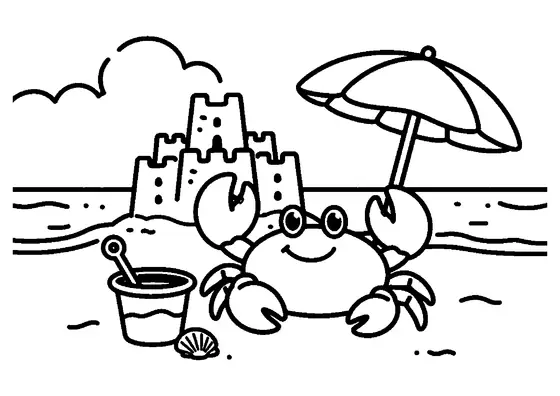
A coastal beach motif displays a sandcastle built with sturdy towers, an arched central gate, and a top flag.

A4 format (landscape), black outlines on a white background · for home and classroom use
All coloring pages: Summer Coloring Pages
Similar coloring pages: Summer Coloring Pages




What else can you print? Free, no account needed
Custom Name Coloring Pages
Enter your child's name to generate a custom coloring page featuring large outline letters to color and decorate.
Open generator →Connect the Dots Generator
Eight connect-the-dots pictures across three difficulty levels. Features faint outline guides for younger children and dots only for older kids.
Open generator →Printables
Worksheets, tracing lines, mazes and dot-to-dots in A4.
Browse printables →
Coastal Sandcastle Architecture
The motif illustrates a classic beach sandcastle structure set upon coastal sand. It features solid vertical towers flanking a central entryway gate, topped by a small flag banner at the highest point. Building such structures is a popular activity during family trips to sandy coastlines.
Interesting Facts About Sandcastles and Ocean Beaches
The secret to building durable sandcastles relies on capillary action, where water molecules create tiny surface tension bridges between sand grains. Engineers have discovered that the ideal ratio for building strong sand structures is roughly eight parts dry sand to one part water. Massive international sand sculpting competitions produce detailed castles that can stand for weeks using compressed moist sand.
True Colors of Sand and Beach Materials
- Moist castle sand: golden tan, warm brownish beige, or damp gray-brown
- Dry surrounding sand: pale cream, bright light yellow, or soft off-white
- Sandcastle gate shadow: deep brown, soft gray, or muted slate
- Atop castle flag: vibrant crimson red, ocean blue, or bright sunny yellow