
Wild Rabbit Beside a Tree Stump
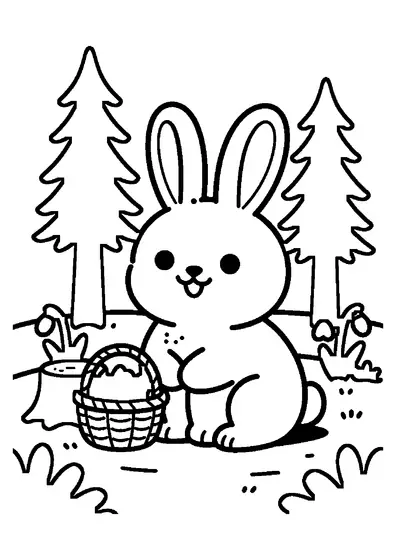
A wild rabbit rests quietly near an old tree stump in a peaceful woodland clearing bordered by slender birch trees.

A4 format (portrait), black outlines on a white background · for home and classroom use
All coloring pages: Spring Coloring Pages
Similar coloring pages: Spring Coloring Pages



What else can you print? Free, no account needed
Custom Name Coloring Pages
Enter your child's name to generate a custom coloring page featuring large outline letters to color and decorate.
Open generator →Connect the Dots Generator
Eight connect-the-dots pictures across three difficulty levels. Features faint outline guides for younger children and dots only for older kids.
Open generator →Printables
Worksheets, tracing lines, mazes and dot-to-dots in A4.
Browse printables →
Wild Rabbit in a Birch Clearing
In a calm forest clearing, a wild rabbit sits right beside an old tree stump. Surrounding this quiet spot are birch trees forming a gentle woodland grove. The natural forest setting captures a tranquil moment in nature during the spring season.
Natural Habits of Woodland Rabbits
Wild rabbits frequently choose woodland clearings near birch trees because fallen timber and stump roots provide quick escape routes from danger. These mammals are most active during dawn and dusk when natural light is soft and predators are less active. Birch groves offer ample vegetation and soft soil where rabbits can forage for fresh spring green shoots.
Colors of Forest Rabbits and Birch Trees
- Rabbit fur: brownish-gray, agouti, or light tan with a creamy underside
- Rabbit nose and inner ears: soft pale pink
- Birch tree bark: chalky white with dark charcoal horizontal stripes and scars
- Tree stump: weathered gray wood with brown inner ring markings
- Forest floor moss and shoots: vibrant spring green and earthy brown