
Stork Nesting on a Telegraph Pole
A tall wading bird occupies a bulky twig nest built high on a utility post near farm buildings.

A4 format (portrait), black outlines on a white background · for home and classroom use
All coloring pages: Spring Coloring Pages
Similar coloring pages: Spring Coloring Pages


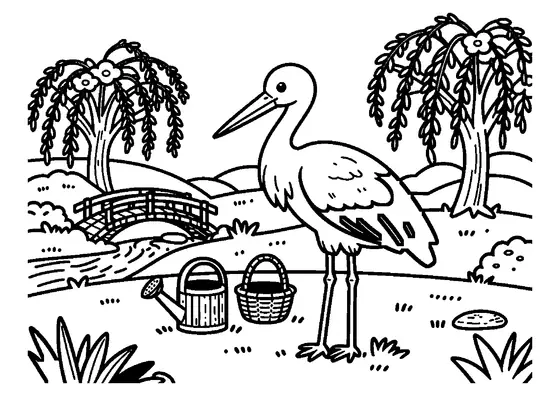

What else can you print? Free, no account needed
Custom Name Coloring Pages
Enter your child's name to generate a custom coloring page featuring large outline letters to color and decorate.
Open generator →Connect the Dots Generator
Eight connect-the-dots pictures across three difficulty levels. Features faint outline guides for younger children and dots only for older kids.
Open generator →Printables
Worksheets, tracing lines, mazes and dot-to-dots in A4.
Browse printables →
Nesting White Stork on a Rural Pole
A stork stands inside a large nest crafted from dry branches atop a tall pole. Located near a stable beside a country road, the scene captures a typical spring bird habitat.
Stork Nesting Habits and Migration
White storks migrate thousands of miles from wintering grounds in Africa back to Europe every spring to breed. These large birds frequently return to the exact same nest year after year, adding new sticks annually until nests can weigh several hundred pounds. Utility poles and rooftop platforms provide elevated vantage points that keep eggs safe from ground predators.
Realistic Colors of the White Stork
- Stork plumage: Pure white body feathers with solid jet-black wing tips.
- Beak and legs: Vibrant coral-red or bright orange-red keratin.
- Nest branches: Earthy brown, weathered gray, and dry straw yellow.
- Utility pole: Treated dark brown timber or weathered gray wooden post.