
Fawn in the Blooming Meadow
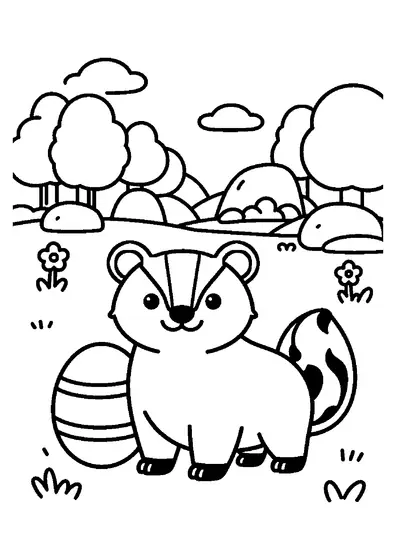
A gentle young fawn pauses peacefully next to a large patterned Easter egg nestled among blooming wild flowers in a spring meadow.

A4 format (portrait), black outlines on a white background · for home and classroom use
All coloring pages: Spring Coloring Pages
Similar coloring pages: Spring Coloring Pages


What else can you print? Free, no account needed
Custom Name Coloring Pages
Enter your child's name to generate a custom coloring page featuring large outline letters to color and decorate.
Open generator →Connect the Dots Generator
Eight connect-the-dots pictures across three difficulty levels. Features faint outline guides for younger children and dots only for older kids.
Open generator →Printables
Worksheets, tracing lines, mazes and dot-to-dots in A4.
Browse printables →
A Young Fawn in a Spring Meadow
A gentle young fawn stands peacefully beside a large patterned Easter egg in the middle of a meadow blooming with spring flowers. The surrounding countryside landscape features tall flowering plants and wild vegetation. This serene setting captures a moment of forest wildlife amidst bright seasonal decorations.
Interesting Facts About Forest Fawns
Newborn fawns are born with white spots along their backs that mimic the dappled sunlight filtering through woodland trees, helping them hide from predators. During their first few weeks of life, fawns have almost no natural scent, which makes it difficult for predators to track them while their mother is grazing nearby. A young fawn can stand and take its first steps within less than an hour after birth.
Authentic Colors of a Woodland Fawn
- Fawn coat: reddish-brown with white spots
- Fawn belly and chest: soft creamy white
- Fawn nose and eyes: warm dark brown
- Meadow flowers: vibrant yellow, purple, white, and coral
- Easter egg decorations: pastel green, soft blue, and sunny yellow