
Capybara by the Spring Pond
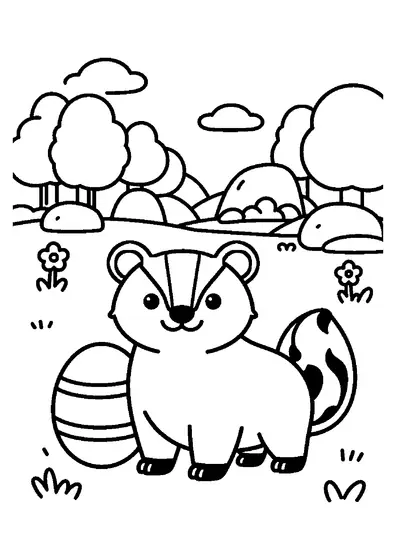
A capybara sits quietly beside a decorated Easter egg near a calm pond bordered by tall reeds and lush bushes.

A4 format (portrait), black outlines on a white background · for home and classroom use
All coloring pages: Spring Coloring Pages
Similar coloring pages: Spring Coloring Pages



What else can you print? Free, no account needed
Custom Name Coloring Pages
Enter your child's name to generate a custom coloring page featuring large outline letters to color and decorate.
Open generator →Connect the Dots Generator
Eight connect-the-dots pictures across three difficulty levels. Features faint outline guides for younger children and dots only for older kids.
Open generator →Printables
Worksheets, tracing lines, mazes and dot-to-dots in A4.
Browse printables →
Capybara and Easter Egg by the Pond
This waterside scene depicts a capybara resting next to a giant decorated Easter egg. The surrounding landscape features a tranquil pond with gentle waves, accompanied by thick patches of reeds and leafy bushes along the water edge.
Fascinating Facts About Capybaras and Ponds
Capybaras are semi-aquatic mammals native to South America that spend a significant amount of time in freshwater habitats like ponds, rivers, and marshes. They possess webbed feet that allow them to swim efficiently and submerge their bodies for several minutes to escape land predators. Reeds growing along pond edges provide essential shelter for small aquatic species and help prevent soil erosion along the shoreline.
Natural Colors of the Scene
- Capybara fur: Light brown to reddish tan across the body
- Reed stems and leaves: Deep green in spring or golden brown in dried seasons
- Bush foliage: Vibrant emerald green
- Pond water: Reflective shade of blue or muted gray-green
- Easter egg shell: Dyed in bright pastel tones like yellow, pink, or sky blue