
Train Engine on a Mountain Track
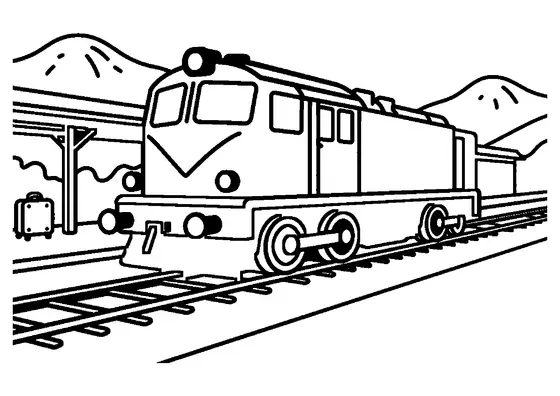
A classic steam train engine pulls a passenger carriage along steel rails through a tall mountain range.

A4 format (landscape), black outlines on a white background · for home and classroom use
All coloring pages: Printable Coloring Pages for Kids
Similar coloring pages: Printable Coloring Pages for Kids

What else can you print? Free, no account needed
Custom Name Coloring Pages
Enter your child's name to generate a custom coloring page featuring large outline letters to color and decorate.
Open generator →Connect the Dots Generator
Eight connect-the-dots pictures across three difficulty levels. Features faint outline guides for younger children and dots only for older kids.
Open generator →Printables
Worksheets, tracing lines, mazes and dot-to-dots in A4.
Browse printables →
Steam Locomotives Navigating Mountain Passes
A classic steam locomotive travels along railroad tracks set against a rugged mountain backdrop. The train engine features large drive wheels connected to mechanical pistons, pulling a passenger car behind it. The surrounding landscape highlights the engineering required to lay train tracks through high-altitude terrain.
How Steam Engines Conquered Mountains
Steam engines generate power by boiling water in a heavy boiler to create pressurized steam, which pushes pistons that turn the locomotive's large wheels. Railroad tracks designed for mountain regions often feature gradual curves and steady inclines to prevent heavy trains from losing traction on steep slopes. Mountain railways frequently cut through rock passes and cross deep valleys to connect remote towns.
Natural Colors of Steam Trains and Mountain Tracks
- Locomotive body: deep black, dark green, or burnished steel
- Train carriage: dark red, navy blue, or varnished wooden brown
- Large wheels and rods: metallic silver, graphite gray, or iron black
- Mountain peaks: slate gray rock with white snow-capped tops
- Railroad tracks: steel silver rails set on wooden brown ties and gray stone ballast