
Train at a Mountain Station
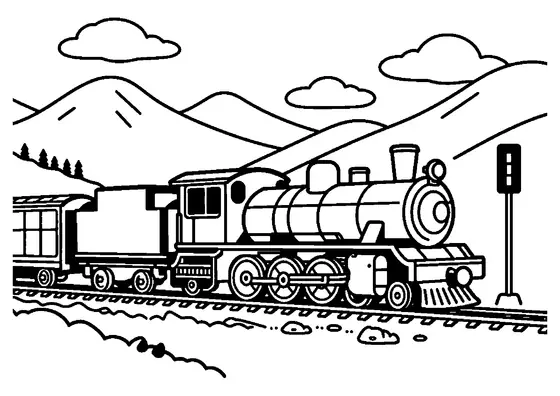
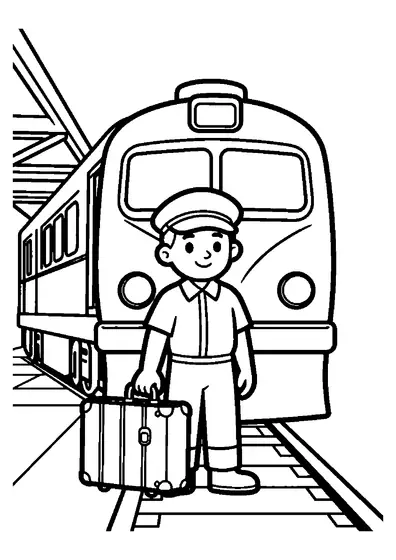
A powerful locomotive sits at a high-altitude railway station platform alongside passenger luggage equipment.

A4 format (landscape), black outlines on a white background · for home and classroom use
All coloring pages: Printable Coloring Pages for Kids
Similar coloring pages: Printable Coloring Pages for Kids



What else can you print? Free, no account needed
Custom Name Coloring Pages
Enter your child's name to generate a custom coloring page featuring large outline letters to color and decorate.
Open generator →Connect the Dots Generator
Eight connect-the-dots pictures across three difficulty levels. Features faint outline guides for younger children and dots only for older kids.
Open generator →Printables
Worksheets, tracing lines, mazes and dot-to-dots in A4.
Browse printables →
Mountain Station Rail Operations
Railways built through mountainous terrain connect isolated regions across challenging elevations. A heavy locomotive rests alongside a station platform, positioned near a luggage cart holding a suitcase ready for passenger transport.
High-Altitude Railway Engineering
Mountain rail systems frequently employ specialized cog machinery or heavy-duty braking systems to navigate steep gradient tracks safely. Station buildings in high regions feature reinforced structures designed to endure severe snowstorms and icy weather conditions.
Real Colors of Mountain Trains
- Locomotive engine body: Dark red, navy blue, or forest green
- Station platform: Weathered gray stone, beige concrete, or brown
- Luggage cart frame: Dark iron gray or timber brown
- Suitcase leather: Deep tan, maroon, or dark brown