
Canadian Log Cabin by a River
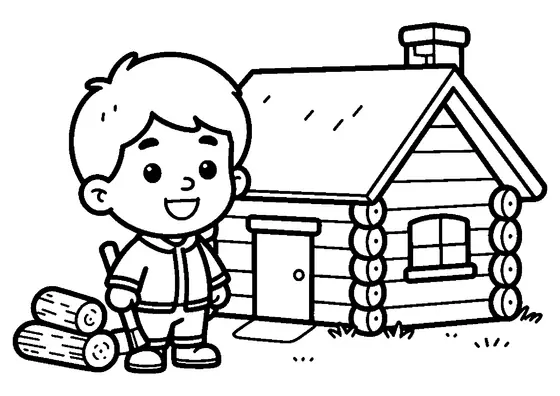
A sturdy log cabin stands beside a flowing mountain river while a boy explores the surrounding Canadian countryside.

A4 format (portrait), black outlines on a white background · for home and classroom use
All coloring pages: House Coloring Pages
Similar coloring pages: House Coloring Pages


What else can you print? Free, no account needed
Custom Name Coloring Pages
Enter your child's name to generate a custom coloring page featuring large outline letters to color and decorate.
Open generator →Connect the Dots Generator
Eight connect-the-dots pictures across three difficulty levels. Features faint outline guides for younger children and dots only for older kids.
Open generator →Printables
Worksheets, tracing lines, mazes and dot-to-dots in A4.
Browse printables →
Traditional Canadian Log Cabin Along a Riverbank
A large wooden home constructed from heavy logs sits along the bank of a mountain river. Nearby, a young boy stands in the open air, enjoying the wilderness atmosphere. The rural setting reflects classic Canadian architecture built to withstand severe mountain weather and seasonal river changes.
Traditional Construction of Wilderness Log Cabins
Pioneer builders in Canada crafted log homes using dense timber species like cedar, pine, or spruce for superior insulation. Interlocking corner notches hold structural logs firmly together without requiring complex metal framing. Building homes near natural rivers provided homesteaders with fresh water, fish, and convenient transportation routes before roads existed.
True Colors of a Canadian Wilderness Scene
- Log cabin walls: Natural pine brown, cedar amber, or dark stained wood
- Cabin roof: Charcoal gray shingles or dark green metal panels
- Mountain river water: Deep blue, turquoise, or clear reflective gray
- Boy's jacket: Bright red, yellow, or forest green winter coat