
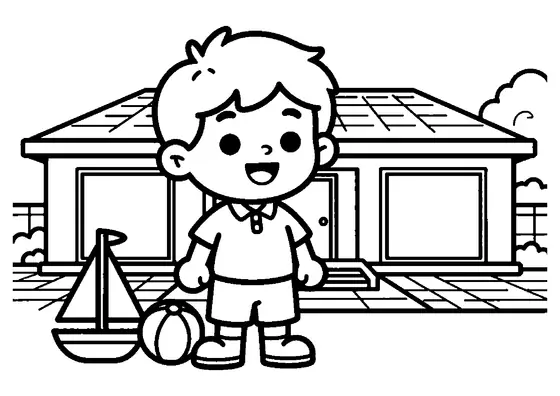
Boy in Front of a House with a Pitched Tile Roof
A boy stands before a classic residential home that features a textured pitched tile roof and a decorative chimney.

A4 format (portrait), black outlines on a white background · for home and classroom use
All coloring pages: House Coloring Pages
Similar coloring pages: House Coloring Pages


What else can you print? Free, no account needed
Custom Name Coloring Pages
Enter your child's name to generate a custom coloring page featuring large outline letters to color and decorate.
Open generator →Connect the Dots Generator
Eight connect-the-dots pictures across three difficulty levels. Features faint outline guides for younger children and dots only for older kids.
Open generator →Printables
Worksheets, tracing lines, mazes and dot-to-dots in A4.
Browse printables →
Classic Home with a Decorative Tile Roof
This scene displays a classic residential house built with a pitched roof lined with textured tiles. A decorative chimney rises from the rooftop structure, adding a traditional architectural accent. A boy stands in the foreground near the entrance of the house.
History and Utility of Roof Tiles
Clay roof tiles have been manufactured and used across the world for thousands of years due to their fire resistance and weather durability. Individual overlapping tiles allow rainwater to flow downward seamlessly while preventing moisture from penetrating the wooden attic beams below. Chimneys were designed to safely channel smoke away from interior fireplaces and cooking hearths.
Authentic Colors of Tiled Houses
- Clay roof tiles: Terracotta red, copper orange, or charcoal gray
- Chimney bricks: Reddish-brown, dark crimson, or gray stone
- Exterior walls: Off-white, soft yellow, or cream
- Window trim: Dark brown or white