
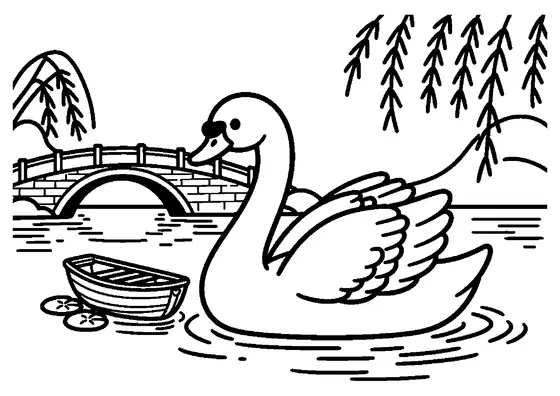
Swan on a Pond by a Heart-Shaped Reed Island
A graceful waterfowl glides across a quiet park pond next to a heart-shaped island covered in reeds and water lilies.

A4 format (landscape), black outlines on a white background · for home and classroom use
All coloring pages: Valentine's Day Coloring Pages
Similar coloring pages: Valentine's Day Coloring Pages


What else can you print? Free, no account needed
Custom Name Coloring Pages
Enter your child's name to generate a custom coloring page featuring large outline letters to color and decorate.
Open generator →Connect the Dots Generator
Eight connect-the-dots pictures across three difficulty levels. Features faint outline guides for younger children and dots only for older kids.
Open generator →Printables
Worksheets, tracing lines, mazes and dot-to-dots in A4.
Browse printables →
Scenic Park Pond with Mute Swans and Floating Vegetation
Quiet park ponds often serve as sanctuaries for wild waterfowl, where shallow waters allow aquatic vegetation like water lilies and tall reeds to thrive. Floating vegetation creates natural habitats for nesting birds while providing shelter for small fish beneath the surface. Small islands surrounded by water plants form secluded resting spots where swans can preen their feathers away from park walkways.
Fascinating Facts About Waterfowl Habitats
Mute swans build large mound nests out of reeds, grasses, and roots right near the water edge or on shallow islands. Reeds help naturally filter pond water by absorbing nutrients and trapping floating sediment in their dense root systems. Water lily pads offer shade to aquatic life, helping regulate water temperature during warm sunny days.
Natural Colors of Mute Swans and Pond Plants
- Swan feathers: pure white plumage on mature adults, with grayish-brown feathers on young cygnets
- Swan beak: bright orange bill with a characteristic black knob near the forehead
- Water lily blossoms: classic white or pale pink petals surrounding a vibrant yellow center
- Reeds and aquatic stems: rich emerald green in summer, turning golden brown as autumn approaches