
Fawn Beside Heart-Shaped Foliage in the Forest
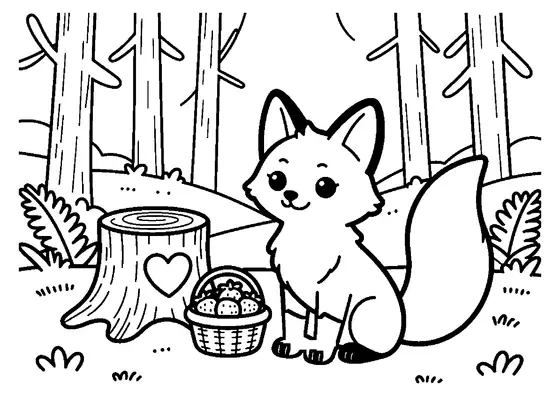
A young fawn pauses in a quiet forest clearing filled with slim birch trees, wild green foliage, and a carved tree stump.

A4 format (landscape), black outlines on a white background · for home and classroom use
All coloring pages: Valentine's Day Coloring Pages
Similar coloring pages: Valentine's Day Coloring Pages




What else can you print? Free, no account needed
Custom Name Coloring Pages
Enter your child's name to generate a custom coloring page featuring large outline letters to color and decorate.
Open generator →Connect the Dots Generator
Eight connect-the-dots pictures across three difficulty levels. Features faint outline guides for younger children and dots only for older kids.
Open generator →Printables
Worksheets, tracing lines, mazes and dot-to-dots in A4.
Browse printables →
Young Deer in a Birch Forest Clearing
Deciduous forests filled with birch trees provide ideal shelter and foraging grounds for young deer during early spring and summer. Birch stands feature pale, peeling bark and airy canopies that allow sunlight to reach the forest floor, encouraging low-growing shrubs and wild greenery to thrive. Fallen logs and weathered tree stumps mark woodland clearings where wildlife frequently rests.
Fascinating Facts About White-Tailed Fawns
Newborn fawns are born with white spots on their coats that mimic dappled sunlight filtering through forest leaves, hiding them from predators. Fawns have almost no natural scent during their first few weeks of life, which keeps them safe while resting quietly in tall grass. Young deer begin nibbling on soft leaves, twigs, and forest flora when they are only a few weeks old.
Real-World Colors of Woodland Fawns and Birch Trees
- Fawn coat: reddish-brown fur with distinct white spots along the back and sides
- Fawn eyes and nose: dark brown coat highlights around a moist black nose
- Birch tree bark: paper-white bark marked with dark charcoal gray horizontal lines
- Forest foliage: light lime green ferns and deep olive undergrowth leaves
- Tree stump: weathered grayish-brown wood with exposed rings