
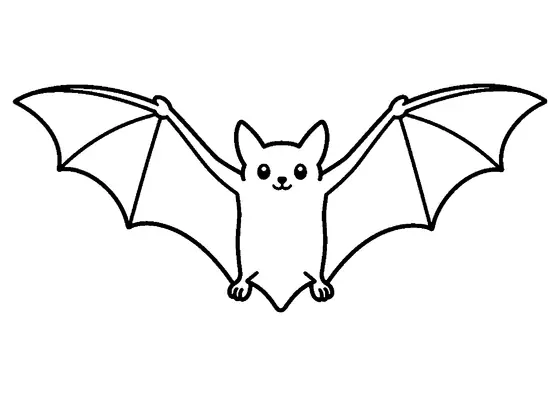
Noctule Bat with Long Wings
The common noctule flies through twilight skies using slender wings adapted for high-altitude hunting.

A4 format (landscape), black outlines on a white background · for home and classroom use
All coloring pages: Pumpkin Coloring Pages
Similar coloring pages: Pumpkin Coloring Pages



What else can you print? Free, no account needed
Custom Name Coloring Pages
Enter your child's name to generate a custom coloring page featuring large outline letters to color and decorate.
Open generator →Connect the Dots Generator
Eight connect-the-dots pictures across three difficulty levels. Features faint outline guides for younger children and dots only for older kids.
Open generator →Printables
Worksheets, tracing lines, mazes and dot-to-dots in A4.
Browse printables →
The Flight of the Common Noctule Bat
A noctule bat glides through mid-air showing its long, narrow wing structure in profile. These flying mammals are active during early dusk, navigating open spaces above forest canopies and near water bodies.
Adaptations of High-Flying Bats
Common noctules are among the first bat species to emerge from their roosts each evening, often appearing while daylight remains visible. They rely on echolocation calls pitched at frequencies beyond human hearing to locate airborne insects. During autumn, some populations migrate hundreds of miles to reach suitable winter hibernating sites.
Natural Colors of the Noctule Bat
- Noctule bat fur: Rich golden-brown, reddish-brown, or dark chocolate brown
- Wing membranes: Dark gray, brownish-black, or deep charcoal
- Bat ears and muzzle: Leathery dark brown or blackish-gray
- Eyes: Small black or dark brown beads