
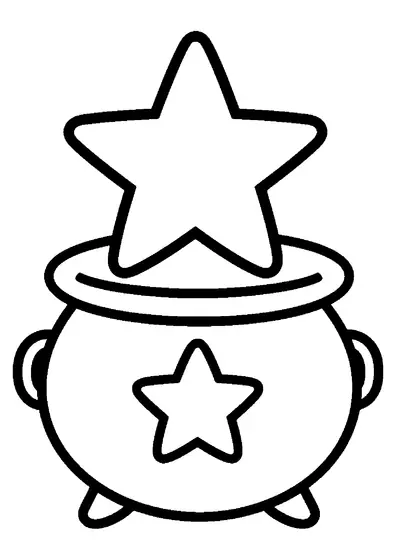
Cauldron with a Lid
A broad-bodied metal pot comes equipped with a fitted cover, a heavy top handle, and wide support feet at the base.

A4 format (landscape), black outlines on a white background · for home and classroom use
All coloring pages: Ghost Coloring Pages
Similar coloring pages: Ghost Coloring Pages




What else can you print? Free, no account needed
Custom Name Coloring Pages
Enter your child's name to generate a custom coloring page featuring large outline letters to color and decorate.
Open generator →Connect the Dots Generator
Eight connect-the-dots pictures across three difficulty levels. Features faint outline guides for younger children and dots only for older kids.
Open generator →Printables
Worksheets, tracing lines, mazes and dot-to-dots in A4.
Browse printables →
Covered Cauldron with Sturdy Support Feet
This illustration highlights a heavy cooking pot complete with a top lid to seal the vessel. The rounded belly of the pot sits atop wide legs designed to keep the container balanced on uneven hearth stones, while a thick handle spans the top.
Function of Pot Lids in Historic Cooking
Heavy iron lids served a vital purpose by trapping steam and heat inside the cooking chamber during slow meal preparation. Keeping a tight lid on a vessel also prevented ash, soot, and stray sparks from entering the food while cooking over an outdoor wood fire.
Realistic Colors for a Covered Iron Vessel
- Pot lid: dark gray, iron black, or bronze
- Round pot body: deep charcoal gray or metallic black
- Wide base feet: dark slate or black iron
- Top handle: weathered iron or dark silver