
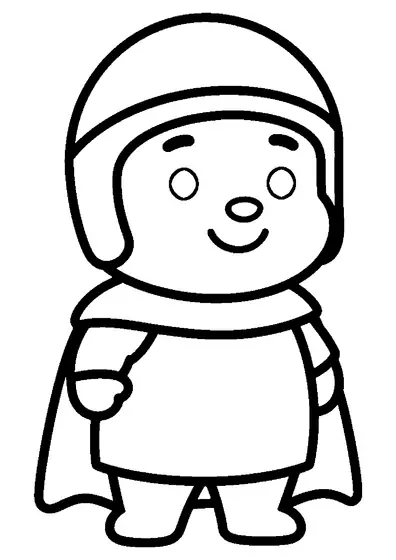
Knight with an Open Visor
A cheerful armored figure stands with a raised helmet visor, displaying a friendly face without any weapons.

A4 format (portrait), black outlines on a white background · for home and classroom use
All coloring pages: Ghost Coloring Pages
Similar coloring pages: Ghost Coloring Pages



What else can you print? Free, no account needed
Custom Name Coloring Pages
Enter your child's name to generate a custom coloring page featuring large outline letters to color and decorate.
Open generator →Connect the Dots Generator
Eight connect-the-dots pictures across three difficulty levels. Features faint outline guides for younger children and dots only for older kids.
Open generator →Printables
Worksheets, tracing lines, mazes and dot-to-dots in A4.
Browse printables →
Armor with an Open Visor
This character wears rounded plate armor paired with a helmet featuring an open, raised visor. The face is fully exposed to show a cheerful smile, and the knight costume includes no weapons.
Function of Helmet Visors in History
Medieval helmet visors were attached with side hinges so knights could lift the faceplate whenever they needed clear vision, fresh air, or to speak to allies. Polished steel armor required regular maintenance with oil and sand mixtures to prevent rust from forming after rain or humid weather.
Authentic Colors of Medieval Armor
- Steel plate armor: metallic silver, steel gray, or burnished iron
- Open visor hinges: dark iron or brass rivets
- Under-armor tunic: deep crimson, navy blue, or forest green
- Leather straps: dark brown or black leather