
Heron by the Easter Pond
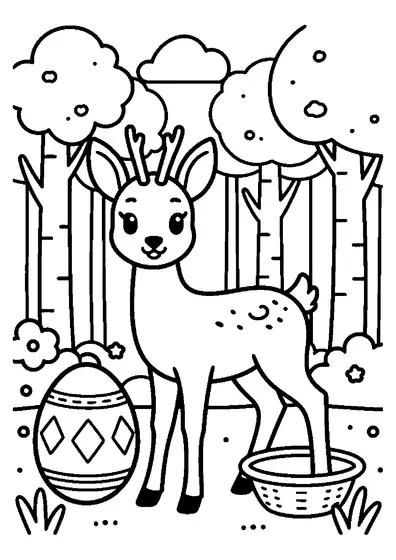
A long-legged heron stands near a decorated egg and a wooden crate along the water's edge.

A4 format (portrait), black outlines on a white background · for home and classroom use
All coloring pages: Easter Coloring Pages
Similar coloring pages: Easter Coloring Pages


What else can you print? Free, no account needed
Custom Name Coloring Pages
Enter your child's name to generate a custom coloring page featuring large outline letters to color and decorate.
Open generator →Connect the Dots Generator
Eight connect-the-dots pictures across three difficulty levels. Features faint outline guides for younger children and dots only for older kids.
Open generator →Printables
Worksheets, tracing lines, mazes and dot-to-dots in A4.
Browse printables →
A Heron on the Pond Shore
This scene features a solitary heron perched by the tranquil waters of a freshwater pond next to an Easter egg and a wooden crate. Tall reeds grow near the bank, while willow trees extend their slender branches over the calm shoreline.
Fascinating Facts About Herons
Herons are patient hunters that stand motionless in shallow water for long periods, waiting for prey to swim within reach. When a fish or frog passes by, the heron extends its long neck with speed to spear or grasp its meal. Willow trees along pond borders provide sheltered roosting sites where these birds can rest safely above ground level.
Natural Colors of the Pond Scene
- Heron plumage: Bluish-gray back and wings with a white stripe down the neck and black crest feathers
- Heron bill and legs: Bright yellow to orange beak with long greenish-yellow legs
- Willow trees: Soft green leaves attached to light brown drooping branches
- Pond water: Reflective shades of blue and green depending on sunlight and water depth
- Wooden crate: Weathered tan or dark brown timber panels
- Easter egg: Painted shell decorated with bright spring shades like yellow, pink, or lavender