
Fawn by the Birch Grove Easter Egg
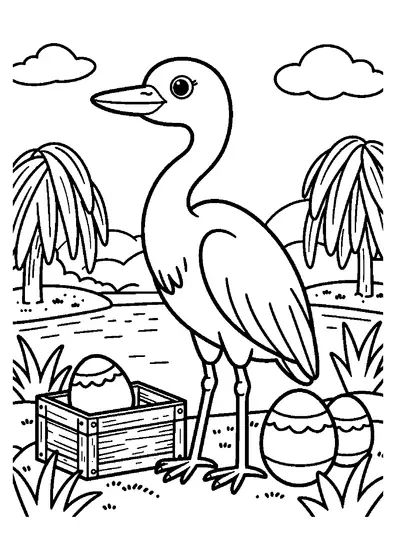
A young fawn pauses near a shallow woven basket holding a decorated Easter egg amidst the slender white trunks of a birch grove.

A4 format (portrait), black outlines on a white background · for home and classroom use
All coloring pages: Easter Coloring Pages
Similar coloring pages: Easter Coloring Pages



What else can you print? Free, no account needed
Custom Name Coloring Pages
Enter your child's name to generate a custom coloring page featuring large outline letters to color and decorate.
Open generator →Connect the Dots Generator
Eight connect-the-dots pictures across three difficulty levels. Features faint outline guides for younger children and dots only for older kids.
Open generator →Printables
Worksheets, tracing lines, mazes and dot-to-dots in A4.
Browse printables →
Gentle Woodland Animals Among Birch Trees
White-tailed deer fawns spend their early weeks resting in quiet woodland thickets while learning to navigate forest terrain. This tranquil landscape depicts a young fawn standing near a woven basket with an Easter egg inside a birch grove. Distinct white bark patterns on the tall birch trees frame the scene, depicting the quiet beauty of early spring natural habitats.
Unique Characteristics of Young Deer and Birch Groves
Birch trees are easily recognized by their papery white bark, which peels in thin layers and contains natural oils that protect the tree from water loss and insects. Fawns are born with camouflage spots scattered across their coats, helping them remain invisible to predators among sunlight filtering through woodland foliage. For the first few months of life, fawns emit almost no natural body odor, further protecting them in the wild.
Natural Palette for Fawns and Birch Forests
- Fawn coat: golden reddish-tan with white spots along the back
- Fawn snout and hooves: dark charcoal or soft dark brown
- Birch tree bark: chalky white with black horizontal marks and scars
- Woven basket material: light straw yellow, tan, or brown reed
- Decorative Easter egg: soft lavender, teal green, and coral shades