
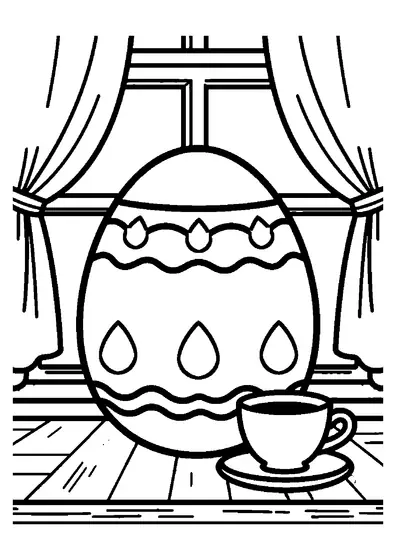
Striped Zigzag Easter Egg on a Craft Table
An Easter egg decorated with repeating stripes and zigzag patterns sits inside a cozy craft workshop setting.

A4 format (portrait), black outlines on a white background · for home and classroom use
All coloring pages: Easter Egg Coloring Pages
Similar coloring pages: Easter Egg Coloring Pages


What else can you print? Free, no account needed
Custom Name Coloring Pages
Enter your child's name to generate a custom coloring page featuring large outline letters to color and decorate.
Open generator →Connect the Dots Generator
Eight connect-the-dots pictures across three difficulty levels. Features faint outline guides for younger children and dots only for older kids.
Open generator →Printables
Worksheets, tracing lines, mazes and dot-to-dots in A4.
Browse printables →
Decorated Easter Egg in a Craft Studio
Traditional Easter eggs often feature geometric patterns such as straight stripes and sharp zigzags. In a dedicated craft room, handcrafted seasonal decorations display creative arrangements of lines and shapes on rounded eggshell surfaces.
Geometric Patterns in Easter Traditions
Decorating eggshells with geometric symbols is an ancient European folk practice, where different shapes carried symbolic meanings like health and protection. Zigzag lines originally represented lightning, water, or agricultural furrows in traditional wax-resist dyeing techniques. Modern studio crafters continue using wax batiks and acrylic paints to replicate these classic folk motifs on natural shells.
Natural Colors of Easter Eggs and Craft Materials
- Eggshell base: White, beige, or light brown
- Wax dye stripes: Deep blue, green, red, or yellow
- Wooden craft table surface: Warm oak or pine brown
- Natural plant dyes: Rich red-orange from onion skins