
Striped and Zigzag Easter Egg on a Sewing Table
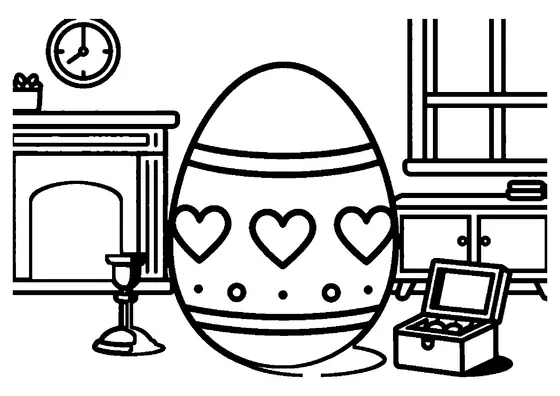
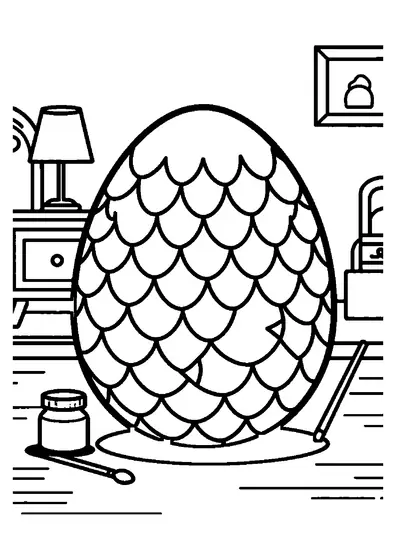
A large Easter egg decorated with wide zigzags and dots rests on a table inside a cozy sewing corner.

A4 format (portrait), black outlines on a white background · for home and classroom use
All coloring pages: Easter Egg Coloring Pages
Similar coloring pages: Easter Egg Coloring Pages



What else can you print? Free, no account needed
Custom Name Coloring Pages
Enter your child's name to generate a custom coloring page featuring large outline letters to color and decorate.
Open generator →Connect the Dots Generator
Eight connect-the-dots pictures across three difficulty levels. Features faint outline guides for younger children and dots only for older kids.
Open generator →Printables
Worksheets, tracing lines, mazes and dot-to-dots in A4.
Browse printables →
Zigzag and Striped Easter Egg in a Sewing Corner
A large Easter egg decorated with bold zigzag lines, horizontal stripes, and circular dots rests on a tabletop. The scene is set within a cozy sewing corner, bringing decorative pattern work into a craft space.
Exploring Zigzag Patterns and Sewing Crafts
Zigzag patterns, also known in heraldry as chevron motifs, appear in textiles across many global cultures dating back thousands of years. In sewing and garment construction, a zigzag stitch is essential for binding raw fabric edges and working with stretchable knit fabrics. Combining simple geometric shapes like dots and zigzags allows craftmakers to generate hundreds of distinct decorative variations.
Authentic Colors of Craft Spaces and Patterned Eggs
- Sewing table surface: Light birch wood, natural maple, or white laminate
- Zigzag stripe bands: Bright orange, lime green, or royal blue
- Patterned dot accents: Canary yellow, plum purple, or white
- Eggshell base color: Natural eggshell white or light cream
- Sewing corner backdrop: Muted sage green, warm cream, or soft gray