
Fox Sitting Beside an Easter Egg
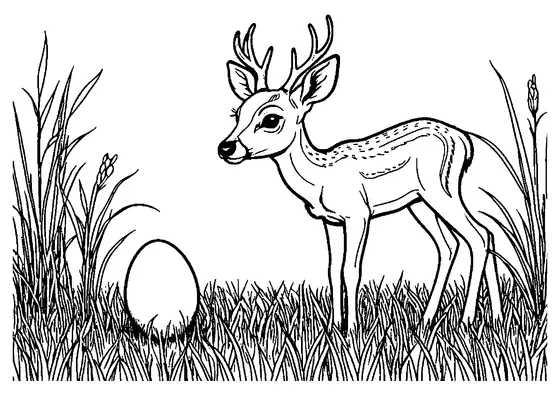
A young fox sits upright in the grass beside an Easter egg that is almost as tall as the animal.

A4 format (landscape), black outlines on a white background · for home and classroom use
All coloring pages: Easter Egg Coloring Pages
Similar coloring pages: Easter Egg Coloring Pages



What else can you print? Free, no account needed
Custom Name Coloring Pages
Enter your child's name to generate a custom coloring page featuring large outline letters to color and decorate.
Open generator →Connect the Dots Generator
Eight connect-the-dots pictures across three difficulty levels. Features faint outline guides for younger children and dots only for older kids.
Open generator →Printables
Worksheets, tracing lines, mazes and dot-to-dots in A4.
Browse printables →
What the fox beside an Easter egg shows
The fox sits on its hind legs in a grassy setting next to one large Easter egg. Its pointed ears, narrow muzzle, alert face, and full tail give it the familiar features of a young fox. The upper background remains open, keeping attention on the animal and its oversized holiday companion.
How foxes use grassy habitats
Foxes often visit grasslands and field edges because these places can provide cover as well as small prey. Their large ears help them detect faint sounds made by animals moving beneath vegetation. A fox may pause and listen carefully before making a quick leap toward the source of a sound.
Real-world colors for the fox and its surroundings
- Red fox coat: rusty orange, reddish brown, or golden red
- Chest and muzzle: cream or white
- Lower legs and ear backs: dark brown to black
- Tail tip: often white, with orange and darker fur along the tail
- Grass: light green, deep green, or dry golden brown