
Easter Chick by an Old Watermill
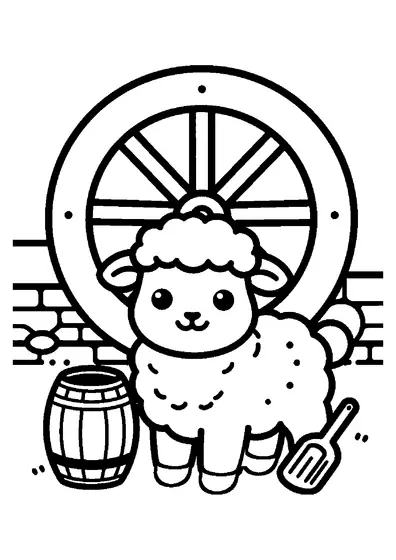
A young chick stands next to a decorated egg near the massive wooden waterwheel and stone wall of a historic mill.

A4 format (landscape), black outlines on a white background · for home and classroom use
All coloring pages: Easter Coloring Pages
Similar coloring pages: Easter Coloring Pages



What else can you print? Free, no account needed
Custom Name Coloring Pages
Enter your child's name to generate a custom coloring page featuring large outline letters to color and decorate.
Open generator →Connect the Dots Generator
Eight connect-the-dots pictures across three difficulty levels. Features faint outline guides for younger children and dots only for older kids.
Open generator →Printables
Worksheets, tracing lines, mazes and dot-to-dots in A4.
Browse printables →
A Historic Watermill Setting with a Young Chick
Beside the heavy stone masonry wall of an old watermill, a small chick stands outdoors near a colorful decorated egg. The waterwheel and running millrace channel define the background of this rustic rural scene, showing how historic water-powered structures operated alongside nature.
Watermill Engineering and Young Poultry
Watermills utilized the kinetic energy of flowing river water directed through a millrace to turn massive timber waterwheels, which drove heavy grindstones to process grain into flour. Newly hatched chicks possess dense downy feathers that provide thermal insulation while they explore farmyard ground. Traditional grain mills were frequently located alongside agricultural farms where poultry roamed free near water sources.
Genuine Colors of Mill and Chick Motifs
- Chick down feathers: Bright canary yellow or pale cream
- Chick beak and legs: Soft peach orange or light pinkish yellow
- Wooden waterwheel: Weathered timber gray, dark oak, or mossy brown
- Millrace water: Cool river blue with green aquatic reflections
- Stone mill building: Natural granite gray, tan sandstone, or river rock gray
- Decorated egg: Patterned soft pastel pink, sky blue, and yellow