
Baby Duckling Next to Eggshell
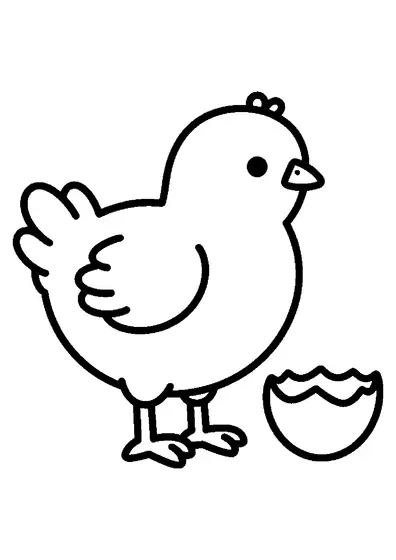
A newly hatched duckling stands on the ground right next to an open cracked eggshell.

A4 format (landscape), black outlines on a white background · for home and classroom use
All coloring pages: Easter Bunny Coloring Pages
Similar coloring pages: Easter Bunny Coloring Pages



What else can you print? Free, no account needed
Custom Name Coloring Pages
Enter your child's name to generate a custom coloring page featuring large outline letters to color and decorate.
Open generator →Connect the Dots Generator
Eight connect-the-dots pictures across three difficulty levels. Features faint outline guides for younger children and dots only for older kids.
Open generator →Printables
Worksheets, tracing lines, mazes and dot-to-dots in A4.
Browse printables →
Hatching Duckling and Eggshell
A young duckling appears shortly after emerging from an egg, resting near a cracked shell segment. Hatching marks the beginning of life for waterfowl, who quickly learn to walk and follow their mother to nearby bodies of water.
How Ducklings Develop and Grow
Ducklings use a special temporary tooth on their bill, called an egg tooth, to break open the hard shell from the inside. Within twenty-four hours of hatching, young ducklings are already able to swim, dive, and find small food items independently.
Natural Duckling and Eggshell Colors
- Young duckling down: bright yellow, soft beige, or brown patches
- Duckling bill and webbed feet: orange or light pinkish yellow
- Duckling eyes: dark brown or black
- Eggshell interior and exterior: off-white, pale blue, or light green