
Wild Hare Among Lupines by a Birch Grove
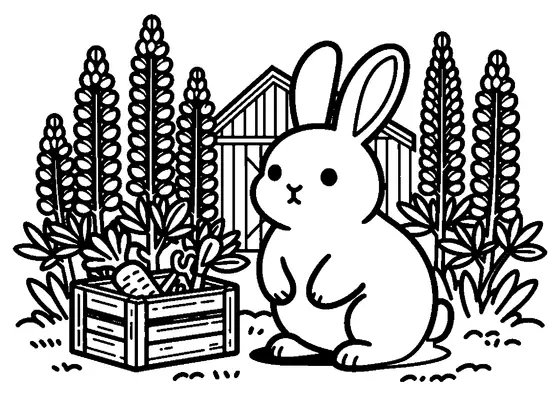
A long-eared hare rests among tall lupines near a grove of slender birch trees.

A4 format (landscape), black outlines on a white background · for home and classroom use
All coloring pages: Flower Meadow Coloring Pages
Similar coloring pages: Flower Meadow Coloring Pages


What else can you print? Free, no account needed
Custom Name Coloring Pages
Enter your child's name to generate a custom coloring page featuring large outline letters to color and decorate.
Open generator →Connect the Dots Generator
Eight connect-the-dots pictures across three difficulty levels. Features faint outline guides for younger children and dots only for older kids.
Open generator →Printables
Worksheets, tracing lines, mazes and dot-to-dots in A4.
Browse printables →
Wild Hares in Woodland Meadows
Wild hares frequently forage along sunny forest borders where flowering lupines and birch trees offer shade and concealment. Unlike rabbits, hares spend their lives entirely above ground, relying on camouflage, acute hearing, and speed to stay safe from predators. Blooming lupine patches near birch groves provide abundant plant life, shelter, and nutrient-rich vegetation.
Adaptations of the Wild Hare
Hares possess powerful hind legs that allow them to reach speeds of up to forty miles per hour across open countryside. Their long ears help regulate body temperature while detecting faint sounds from far distances. During spring and summer, lush tall flowers and birch bark canopy create rich feeding grounds for these swift mammals.
Real Colors of Hares, Lupines, and Birch Trees
- Hare fur: tawny brown, grayish brown, or reddish brown with a pale white underside
- Hare ears: brownish gray with distinct black tips
- Lupine flowers: vibrant purple, deep blue, violet, or pink blossom spikes
- Birch tree bark: chalky white with horizontal dark gray or black streaks
- Birch tree leaves: bright green during spring and summer, turning golden yellow in autumn