
Lizard on a Stone Wall Among Wild Thyme
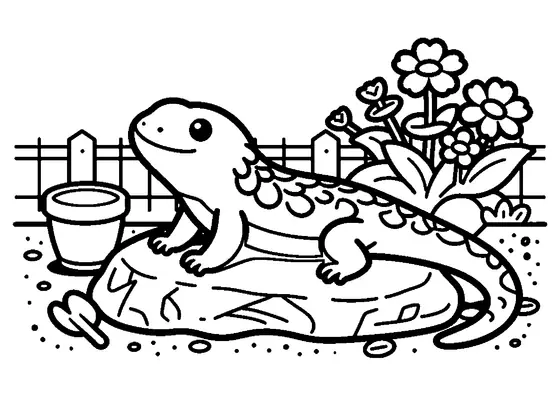
A nimble lizard basks in the warm sun atop an old stone wall surrounded by flowering wild thyme.

A4 format (landscape), black outlines on a white background · for home and classroom use
All coloring pages: Flower Meadow Coloring Pages
Similar coloring pages: Flower Meadow Coloring Pages




What else can you print? Free, no account needed
Custom Name Coloring Pages
Enter your child's name to generate a custom coloring page featuring large outline letters to color and decorate.
Open generator →Connect the Dots Generator
Eight connect-the-dots pictures across three difficulty levels. Features faint outline guides for younger children and dots only for older kids.
Open generator →Printables
Worksheets, tracing lines, mazes and dot-to-dots in A4.
Browse printables →
Lizards on Sunlit Stone Walls
Lizards frequently seek out sun-warmed stone walls and rock garden ledges where aromatic herbs like wild thyme grow in abundance. As cold-blooded reptiles, lizards depend on external heat sources to warm their bodies and raise their energy levels each morning. Dry stone walls offer perfect crevices for quick shelter whenever threats appear or temperatures drop.
The Role of Wild Thyme in Rock Habitats
Wild thyme is a low-growing perennial herb that thrives in rocky, well-drained soils and full sunlight across sunny slopes. Its small, nectar-rich blossoms attract bees, butterflies, and insects, which in turn provide a steady food source for resident lizards. The combination of heat-retaining stone and dense herb cover forms a hospitable microclimate for reptiles.
Real Colors of Wall Lizards and Wild Thyme
- Lizard body scale pattern: emerald green, olive brown, or grayish tan with dark speckles
- Lizard underside: pale cream, yellow, or soft orange
- Wild thyme blossoms: soft lilac, deep purple, or light pink flowers
- Wild thyme leaves: small, dark green or gray-green foliage
- Stone wall masonry: weathered granite gray, sandy beige, or slate black