
Squirrel with an Acorn by an Old Stone Well
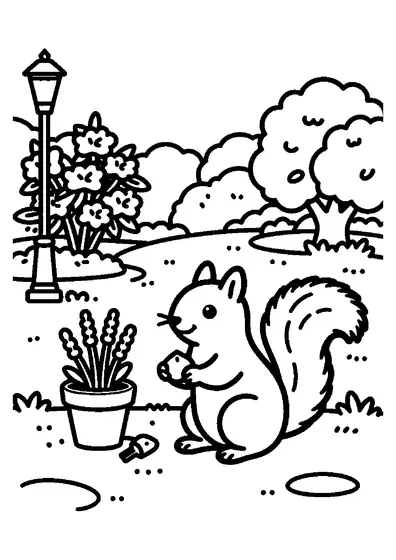
A fluffy squirrel sits on the ledge of a historic stone well while clutching a fresh acorn among garden plants.

A4 format (portrait), black outlines on a white background · for home and classroom use
All coloring pages: Flower Meadow Coloring Pages
Similar coloring pages: Flower Meadow Coloring Pages

What else can you print? Free, no account needed
Custom Name Coloring Pages
Enter your child's name to generate a custom coloring page featuring large outline letters to color and decorate.
Open generator →Connect the Dots Generator
Eight connect-the-dots pictures across three difficulty levels. Features faint outline guides for younger children and dots only for older kids.
Open generator →Printables
Worksheets, tracing lines, mazes and dot-to-dots in A4.
Browse printables →
A Garden Squirrel at a Stone Well
The scene presents a squirrel perched on the stone edge of a traditional water well. Holding an oak acorn, the creature is surrounded by garden plants and rustic stone architecture typical of older country estates.
Acorns and Squirrel Behavior in Old Gardens
Squirrels spend much of late summer and autumn collecting tree nuts like acorns to store for winter. They bury hundreds of acorns across gardens and woods, unintentionally planting new oak trees when forgotten nuts germinate. Old stone structures provide excellent elevated vantage points for squirrels to inspect their environment.
Authentic Colors of Garden Wildlife and Stone
- Squirrel fur: Reddish-orange, dark gray, or rich chestnut brown
- Squirrel tail: Bushy brown or gray with lighter tip highlights
- Acorn cap and shell: Tan top with a smooth brown or green-tinged nut
- Old stone well: Weathered gray, slate, or moss-tinted beige
- Garden plants: Vibrant green leaves with natural earth tones