
Colorful Caterpillar on a Wooden Garden Bench
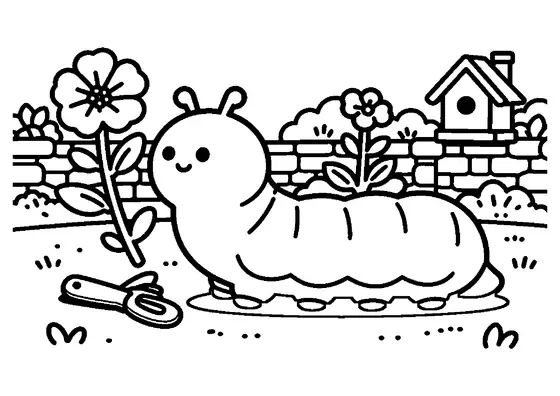
A caterpillar travels across the top of a wooden bench situated near flourishing flower beds in a park.

A4 format (landscape), black outlines on a white background · for home and classroom use
All coloring pages: Flower Meadow Coloring Pages
Similar coloring pages: Flower Meadow Coloring Pages



What else can you print? Free, no account needed
Custom Name Coloring Pages
Enter your child's name to generate a custom coloring page featuring large outline letters to color and decorate.
Open generator →Connect the Dots Generator
Eight connect-the-dots pictures across three difficulty levels. Features faint outline guides for younger children and dots only for older kids.
Open generator →Printables
Worksheets, tracing lines, mazes and dot-to-dots in A4.
Browse printables →
Caterpillar Crawling on a Wooden Bench
A small caterpillar crawls along the back rest of a wooden outdoor bench positioned next to garden flower beds. Public parks and garden spaces host various plant species that support insects during their growth stages. Wooden benches provide resting areas surrounded by vibrant floral displays throughout the summer months.
Fascinating Facts About Caterpillars
Caterpillars are the larval stage of butterflies and moths, spending most of their early life eating plant foliage to gain energy. They possess several pairs of tiny simple eyes and up to four thousand distinct muscles to move their segmented bodies along stems and wooden surfaces. As they grow rapidly, caterpillars shed their outer skin multiple times before forming a protective chrysalis.
Natural Colors of the Garden Setting
- Caterpillar body: bright green, yellow-striped, or black and orange
- Wooden bench: natural oak brown, teak, or weathered gray
- Flower blossoms: vibrant pink, yellow, red, or purple
- Flower leaves and stems: rich emerald green
- Bench metal hardware: dark iron gray or black